
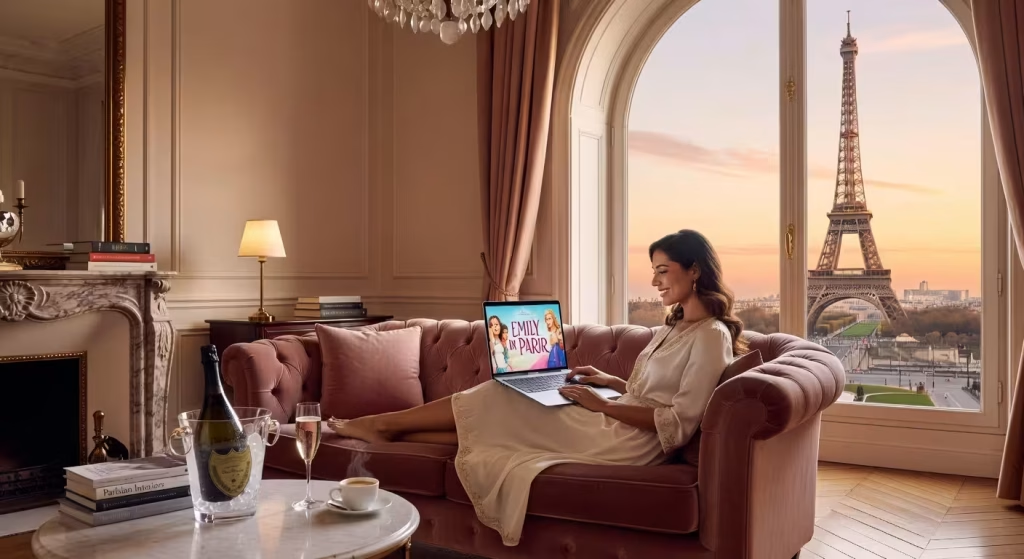
In the glittering haze of Netflix’s Emily in Paris, a peculiar fascination has bubbled up among viewers who dip into the world of luxury dating. The show’s protagonist, Emily Cooper, flits through a candy-coated version of Parisian life, where high-end fashion, lavish dinners, and whirlwind romances seem as effortless as a morning croissant. But as observers of the sugar lifestyle, we can’t help but dissect how this frothy series captures—and often misses—the nuances of arrangements that blend affection with affluence.
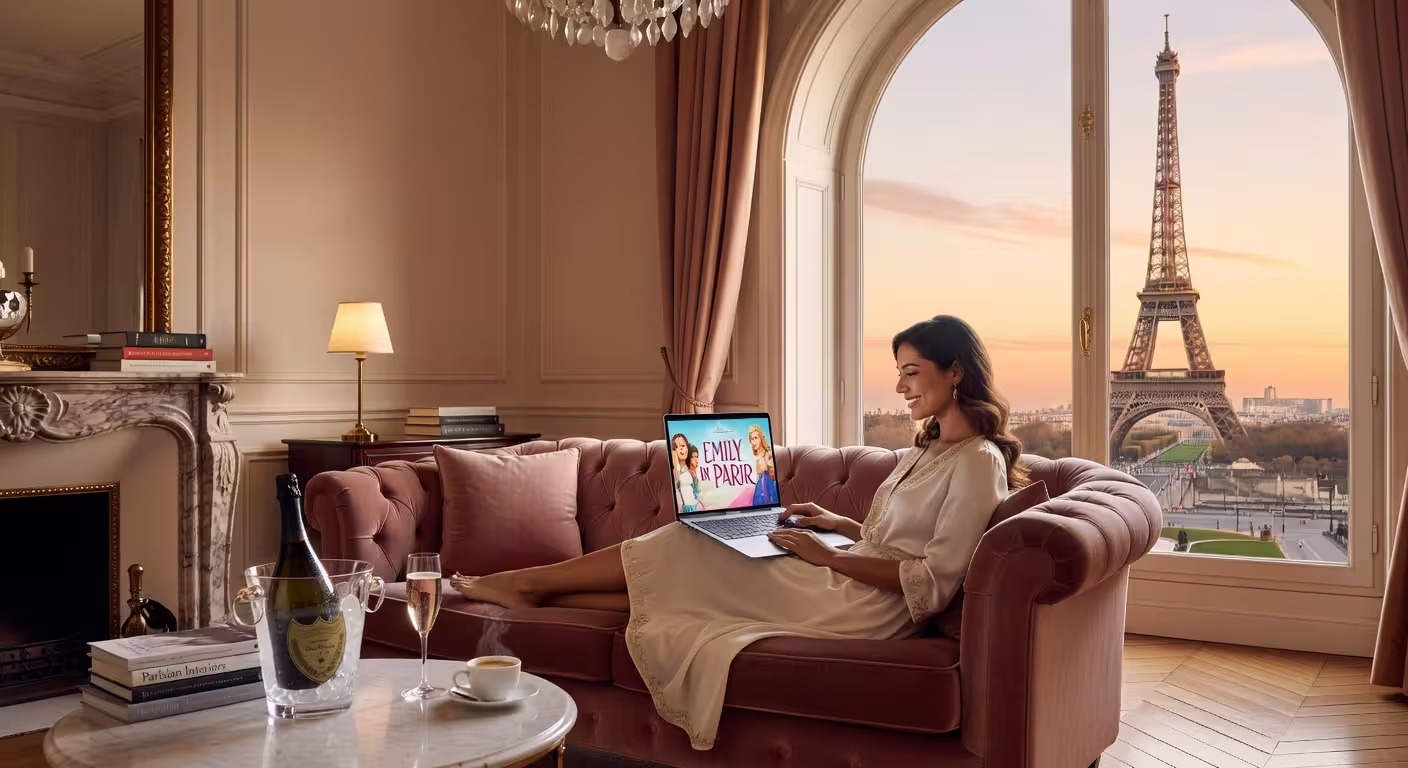
What’s more interesting is how it mirrors broader cultural shifts, where social media feeds overflow with #SugarBabyLife aesthetics, turning what was once whispered about into aspirational content. The series, now in its fourth season, has amassed over 58 million views in its first week alone for season three, according to streaming data trackers. It’s no surprise; Emily’s escapades tap into a zeitgeist obsessed with escapism, especially post-pandemic, where luxury dating represents not just financial support but a portal to elevated experiences.
We’ve seen this reflected on platforms like TikTok, where creators post “day in the life” videos of yacht outings and designer hauls, amassing millions of likes. Celebrities like Megan Thee Stallion have even nodded to sugar dynamics in lyrics, normalizing the conversation around mutually beneficial relationships. The cultural embrace of this lifestyle has shifted dramatically—what was once coded language is now trending audio.
Where the show gets it right: The intoxication of aspiration
Emily in Paris nails certain elements of luxury dating with uncanny precision. Take the allure of the unexpected. Emily’s encounters often begin with serendipitous meetings at chic events or upscale bars, echoing the real-world thrill that many in the sugar community describe as empowering. As one sugar baby in her late twenties shared with us anonymously, “It’s that spark when you’re at a gallery opening, and suddenly someone’s offering to whisk you away for the weekend—it’s intoxicating, just like in the show.”
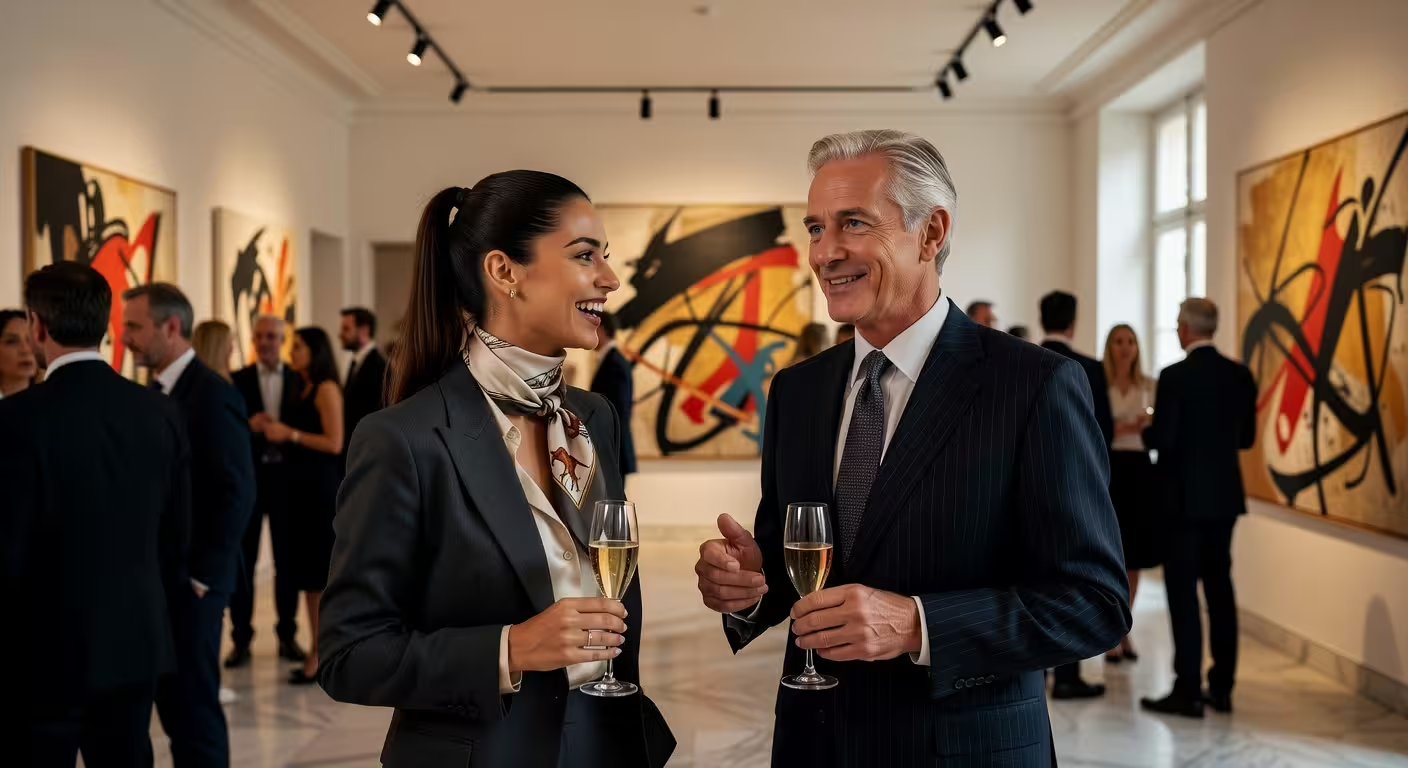
The series captures the aspirational glamour with remarkable accuracy: Chanel-clad strolls along the Seine, impromptu trips that feel ripped from a fairy tale, dinners where the wine list reads like a collector’s catalogue. This portrayal aligns with trends we’ve observed, where arrangements increasingly emphasize experiences over mere transactions. Data from sugar dating apps indicates a 25% rise in profiles seeking “travel companions” over the last year, suggesting a shift toward holistic luxury rather than straightforward allowances.
The aesthetic language of the show also resonates deeply. From Emily’s eclectic wardrobe—mixing bold prints with timeless elegance—to the opulent settings, it mirrors the curated feeds of sugar influencers on Instagram. We’ve seen this trend explode, with hashtags like #LuxuryDateNight garnering over 500,000 posts, blending fashion advice with subtle nods to affluent pairings. The show’s rightness lies in celebrating this visual language, where a well-chosen outfit can open doors to exclusive circles.
What the series understands instinctively is the psychological dimension of luxury. Paris, with its Michelin-starred restaurants and haute couture ateliers, serves as more than backdrop—it amplifies the fantasy. But in truth, luxury dating extends beyond the City of Light. We’ve observed a global surge, from Saint-Tropez’s Mediterranean glamour to Tokyo’s exclusive lounges, Miami’s yacht parties to London’s private members’ clubs.
The confidence factor: Empowerment through elevation
Perhaps most accurately, the show captures how luxury arrangements can catalyze personal transformation. Emily’s confidence grows through her high-society dalliances, much like how many in the community report boosted self-assurance from curated experiences. A 2023 survey of over 1,000 sugar daters revealed that 68% felt more empowered in their personal lives due to these arrangements, underscoring a trend toward self-actualization amid opulence.
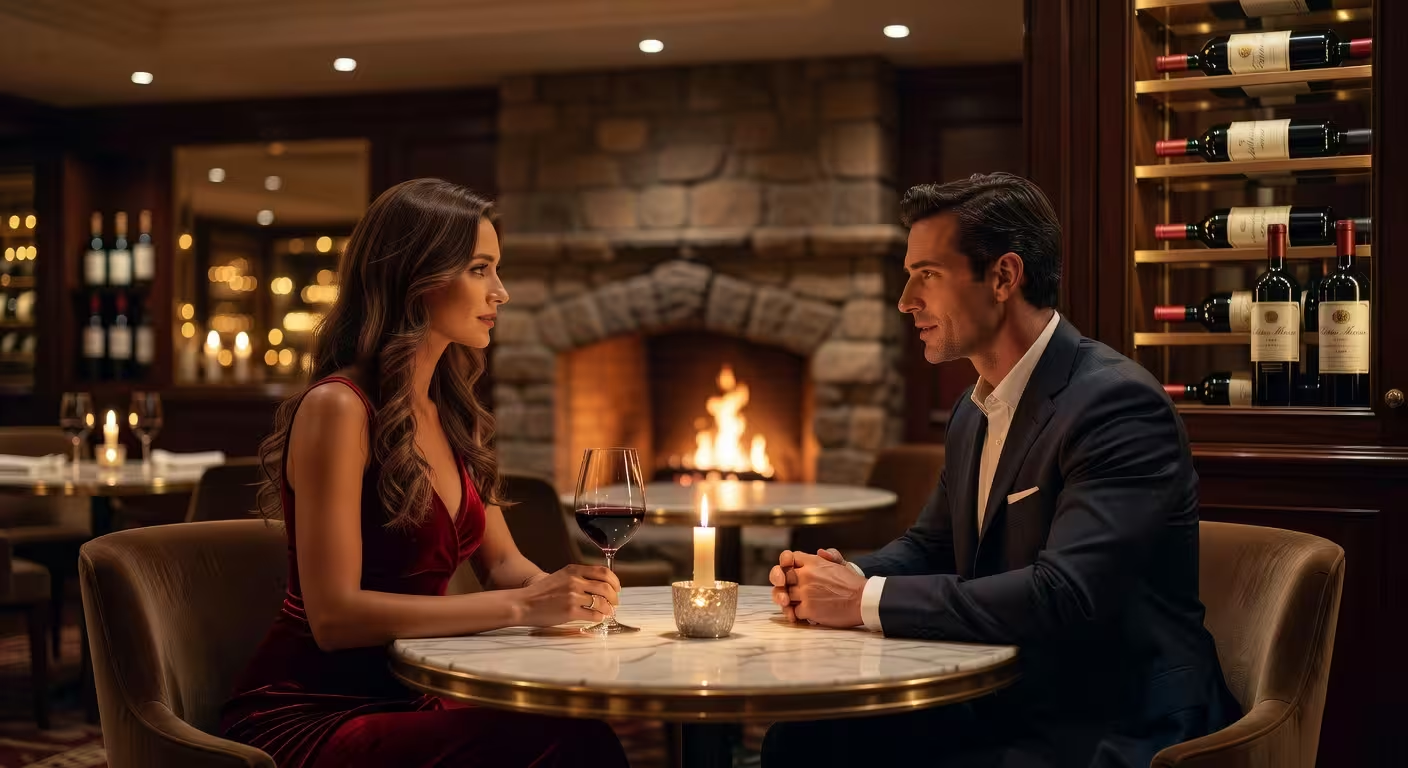
“It’s about creating memories that feel cinematic, but without the scripted endings,” confided one sugar daddy in his forties who spoke with us on condition of anonymity. This sentiment captures what Emily in Paris excels at: portraying the intoxicating high of elevated companionship, that particular alchemy where sophistication meets spontaneity.
Celebrities like Timothée Chalamet, often linked to high-profile romances, embody the modern archetype of the charming benefactor—blending youth with affluence in ways that echo the show’s male leads. This isn’t just visual fantasy; it reflects a genuine cultural shift in how we understand mutually beneficial relationships as spaces for growth, not just transaction.
Where it stumbles: The glossy gaps in reality
The reality, however, diverges in subtler but significant ways. Emily’s world is one of perpetual sunshine and minimal fallout, where romantic entanglements resolve with a quip and a cocktail. In contrast, the actual sugar lifestyle often demands keen awareness of boundaries and emotional navigation. While the show flirts with power dynamics—think Emily’s flirtations with wealthy clients—it glosses over the strategic finesse required in real luxury dating.
Arrangements aren’t always as spontaneous as a plot twist. They involve vetted connections, clear expectations, and the kind of discretion that Emily’s overt flirtations would shatter. As one sugar baby in her thirties told us, “It’s not about broadcasting; it’s about savoring the private thrill.” This contrast highlights a broader cultural tension: the push for visibility in an era of social media versus the traditional veil of secrecy in luxury arrangements.
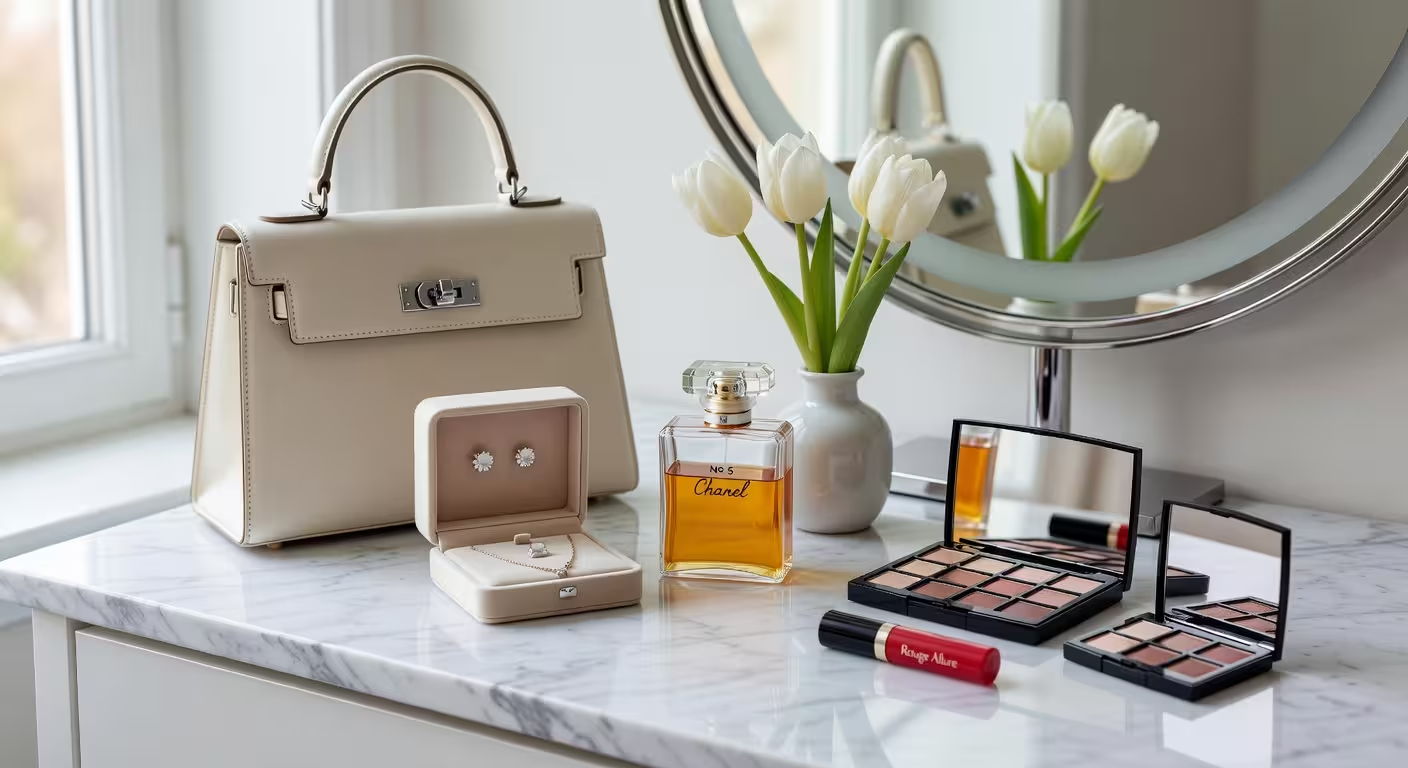
We’ve noticed a rising discourse on platforms like Reddit threads dedicated to sugar lifestyles, where participants emphasize communication over assumption. The series’ lighthearted tone sidesteps the potential for vulnerability, presenting a sanitized version that ignores the emotional labor involved. Real luxury dating requires what sociologist Dr. Eva Illouz might call “emotional capitalism“—the careful calibration of feeling and pragmatism.
The show also simplifies the negotiation dynamics that define successful arrangements. Emily’s relationships lack the depth of discussion that characterizes the new wave of sugar relationships, where boundaries, expectations, and desires are articulated with refreshing directness. “The show makes it look easy,” observes a longtime member of the community, “but the magic happens when it’s more than just luxury—it’s mutual respect and clear communication.”
The generational divide: Fantasy versus pragmatism
The series touches on generational shifts that we’ve been tracking closely. Emily represents a millennial optimism, occasionally clashing with Gen Z’s pragmatic approach to dating economics. Amid rising living costs—with inflation hitting 8% in major cities last year—luxury dating offers more than fantasy; it provides a tangible buffer against economic precarity.
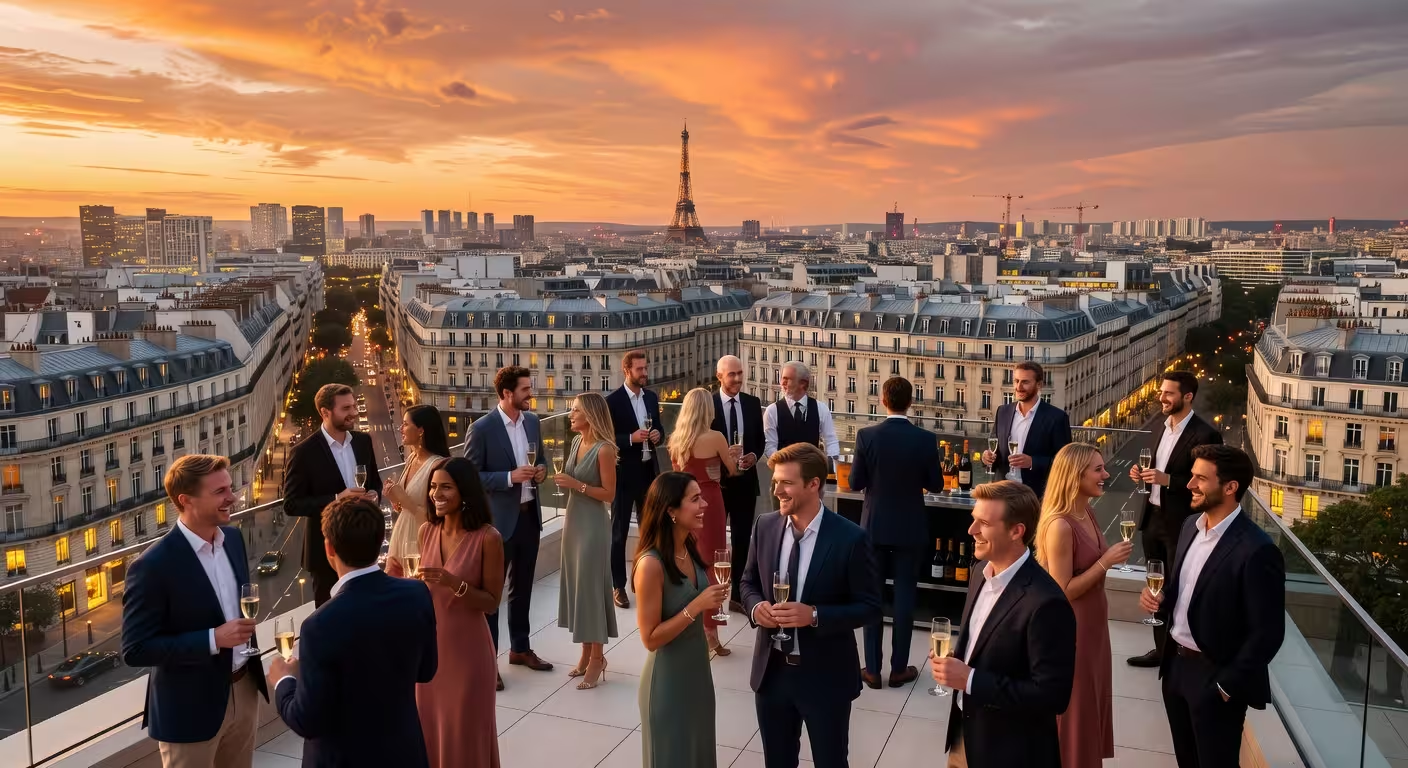
The show gets this right by portraying Emily’s career ambitions as intertwined with her romantic pursuits, reflecting how many blend professional growth with personal arrangements. Celebrities like Zendaya, with her poised public persona, subtly embody this fusion of ambition and allure. Yet there’s a naivety in Emily’s approach that feels distinctly millennial—the belief that charm and enthusiasm can smooth over any cultural faux pas.
Gen Z sugar babies, by contrast, approach these dynamics with what might be called strategic authenticity. They’ve grown up with economic uncertainty as background noise, making them less starry-eyed about luxury and more focused on leveraging arrangements for concrete goals—tuition payments, startup capital, investment portfolios. The show’s candy-coated romanticism doesn’t quite capture this calculating pragmatism, even as it nods toward Emily’s career aspirations.
The bigger picture: Commodification and connection
Here’s where it gets fascinating: Emily in Paris inadvertently critiques the commodification of romance. Emily’s faux pas often stem from treating relationships as marketing strategies, a nod to how sugar dynamics can blur lines between genuine connection and calculated benefit. We’ve observed this tension in online forums, where discussions evolve from transactional views to seeking authentic bonds.
The show highlights a paradox at the heart of modern luxury dating: the desire for both strategic advantage and authentic emotion. Can you curate chemistry? Can you schedule spontaneity? Emily’s misadventures suggest the limits of this approach, even as they celebrate its possibilities. The most successful arrangements, we’ve learned, navigate this paradox with grace—acknowledging the transactional framework while remaining genuinely open to connection.
What Emily in Paris captures brilliantly is the performative aspect of luxury culture. Every outfit is a statement, every locale Instagram-worthy, every moment potentially shareable. This aligns with how many in the sugar community understand their arrangements as partly aesthetic projects—the crafting of a lifestyle that’s as much about the story you can tell as the experiences themselves.
The cultural conversation: From whispers to trending topics
Perhaps the show’s greatest accuracy lies in its timing. By presenting luxury dating as aspirational rather than scandalous, Emily in Paris reflects and accelerates a cultural shift. What was once discussed in coded language now generates think pieces and TikTok trends. The series contributes to normalizing conversations around financial dynamics in relationships, even if it does so through a gauzy filter.
The inspiration factor cannot be understated. Viewers, inspired by Emily’s boldness, are entering the sugar world with fresh eyes, leading to a 15% increase in app sign-ups post each season release, per industry reports. Whether this influx brings more sophistication or naivety to the community remains an open question, but it undeniably expands the conversation.
We’ve also noticed how the show sparks critique from within the community. Social media influencers post “Emily in Paris versus reality” content, highlighting the show’s blind spots while acknowledging its seductive pull. This dialectic—between fantasy and reality, aspiration and pragmatism—enriches the cultural conversation around luxury dating.
The aesthetic economy: Investing in presentation
One element the show portrays with remarkable accuracy is the importance of presentation in luxury circles. Emily’s attention to appearance isn’t vanity—it’s strategic positioning. This mirrors what we’ve observed about successful sugar babies and their approach to beauty investments.
The show understands that in high-end environments, aesthetics function as social currency. The right dress at the right event can catalyze opportunities that transcend the evening itself. This isn’t superficial; it’s recognizing how visual capital operates in exclusive spaces. Emily’s wardrobe mishaps and triumphs serve as masterclasses in this economy.
Yet the show occasionally veers into cartoonish excess—outfits so bold they’d actually hinder rather than help in certain sophisticated circles. Real luxury often whispers rather than shouts, favoring the quiet luxury revolution over Emily’s sometimes maximalist approach. The difference between looking expensive and looking try-hard is subtle but crucial, something the show doesn’t always navigate successfully.
What the show means for the community
For those already navigating luxury arrangements, Emily in Paris offers both validation and frustration. Validation in seeing aspects of the lifestyle portrayed as desirable rather than shameful. Frustration in the gaps between fantasy and practice. “It’s like watching a tourist’s version of your hometown,” one sugar baby explained to us. “Charming, but missing the texture.”
The series has undeniably expanded interest in luxury dating, but not always with adequate context. Newcomers inspired by the show’s glamour sometimes enter spaces unprepared for the emotional intelligence required. For those seeking genuine guidance, finding a dedicated sugar baby platform that emphasizes safety and authenticity becomes crucial—a reality check that Emily’s world conveniently sidesteps.
Yet there’s value in the aspirational portal the show provides. It normalizes the desire for elevated experiences and challenges the stigma around financially asymmetric relationships. In this sense, Emily in Paris serves a cultural function beyond entertainment—it shifts the Overton window on what we’re willing to discuss openly about modern dating economics.
The bottom line: Fantasy as gateway
In the end, what Emily in Paris offers is a glossy lens on luxury dating, one that both enchants and educates. It rights the narrative by amplifying the excitement—the genuine thrill of possibility that draws people to these arrangements. It wrongs it by skimming the complexities—the negotiation, discretion, and emotional labor that make these dynamics sustainable.
But perhaps that oversimplification serves a purpose. By presenting an idealized version, the show invites viewers to imagine themselves in these scenarios, lowering the psychological barrier to entry. Once interest is sparked, deeper exploration can provide the nuance the series lacks.
The show’s cultural impact extends beyond its runtime. It generates conversations at brunch, inspires Pinterest boards, seeds fantasies that might eventually translate into real arrangements. It’s made luxury dating feel less like a taboo and more like an aspirational lifestyle choice—a shift that benefits the entire community by reducing stigma and expanding understanding.
As we continue to watch these trends unfold, both on screen and in reality, the interplay between fantasy and practice keeps the allure alive. Emily in Paris may not capture every nuance of the sugar lifestyle, but it succeeds in making the conversation mainstream. And in a world where visibility often precedes legitimacy, that contribution shouldn’t be underestimated.
The series reminds us that luxury dating exists at the intersection of pragmatism and romance, strategy and spontaneity, aspiration and reality. Whether you’re watching from your couch or living elements of Emily’s adventures yourself, the fascination remains the same: the possibility of transformation through connection, elevated by circumstance. And isn’t that, ultimately, what makes both the show and the lifestyle it depicts so endlessly captivating?