In the glittering ecosystem of contemporary luxury relationships, beauty isn’t merely skin-deep—it’s currency. The modern sugar baby approaches aesthetics with the strategic precision of a venture capitalist, understanding that each investment in her appearance generates compound returns. Drawing from the cultural lexicon of TikTok’s glass skin devotees and the effortless glamour Zendaya brings to every red carpet, these women are architects of their own allure, curating presentations that open doors before words are exchanged.
What’s genuinely fascinating is how this paradigm transcends superficiality. We’re witnessing a cultural recalibration where beauty operates as both armor and access card—particularly potent in circles where first impressions unfold across candlelit tables at Carbone or poolside at Art Basel Miami Beach. According to The NPD Group, women aged 25-35 have increased spending on premium skincare by 18% over the past five years, a figure that correlates intriguingly with the demographic sweet spot of sugar dating participants.
“The contemporary sugar baby is essentially building a personal brand with the sophistication of a Fortune 500 company,” notes Dr. Rachel Greenwald, psychologist and author specializing in modern relationships. “Every aesthetic choice becomes part of a larger narrative of desirability and power.”
These aren’t impulse purchases triggered by influencer hauls. They’re deliberate selections that align with a lifestyle where Instagram stories can catalyze serendipitous encounters at members-only clubs, where TikTok presence amplifies mystique, where presentation telegraphs values before conversation begins. Much like the poised characters navigating class dynamics in The White Lotus or Succession, the sugar baby understands that appearance communicates fluency in an unspoken language of privilege.
The foundation of flawless skin: Building the canvas
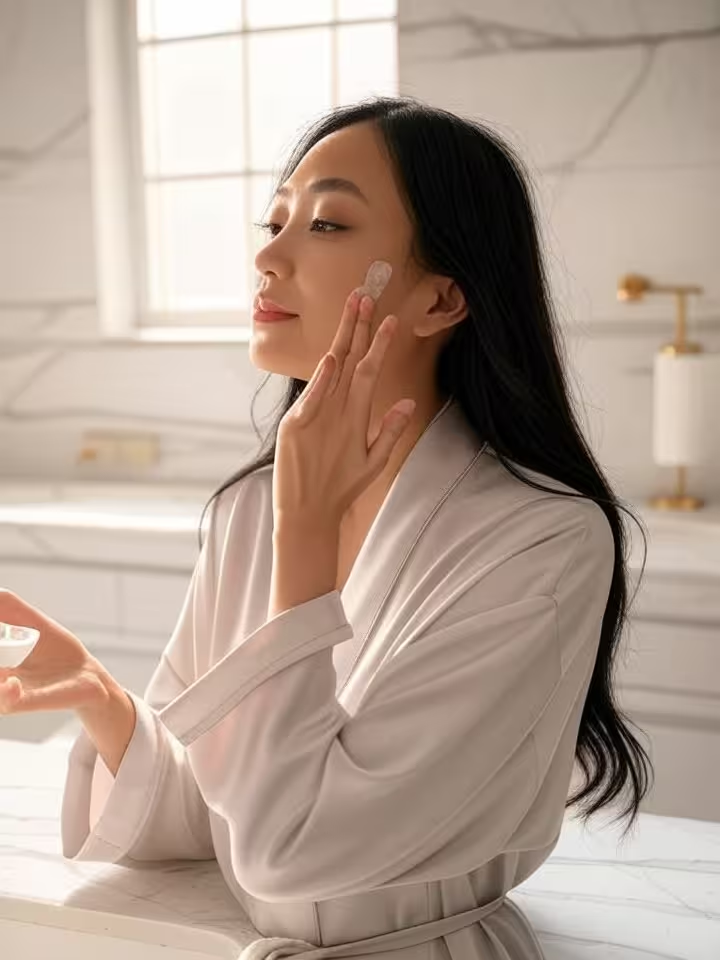
At the epicenter of every sugar baby’s beauty architecture lies an almost reverent approach to skincare—a multi-layered ritual that would make even Charlotte Tilbury nod in approval. The shift from drugstore basics to luxury formulations represents more than consumer evolution; it signals an understanding that radiant skin functions as perpetual introduction.
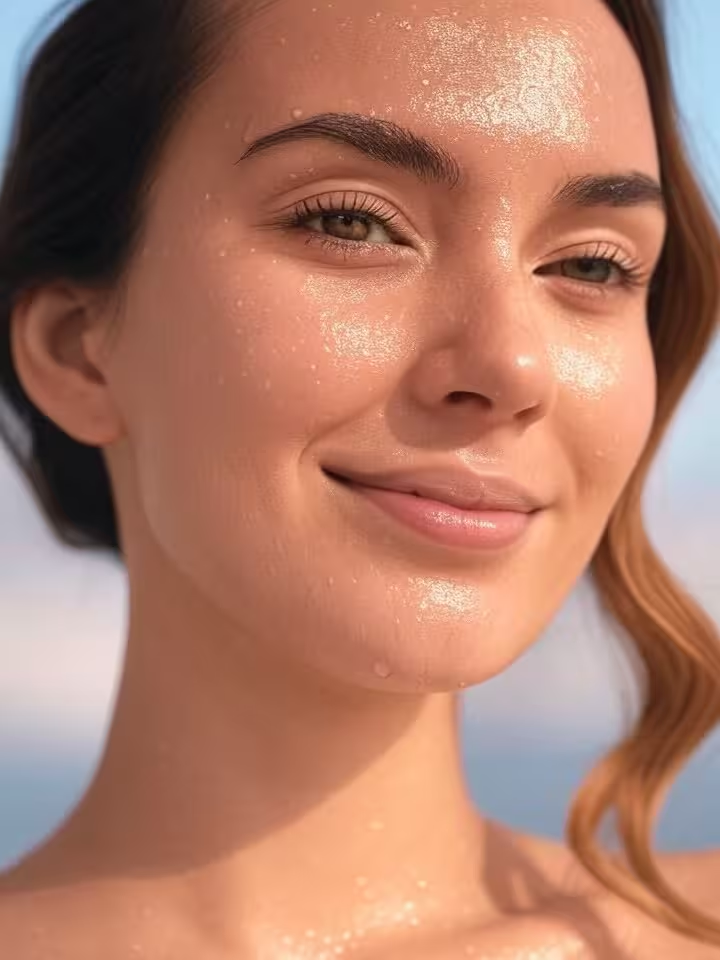
We’ve traced this devotion to the K-beauty revolution’s influence, which democratized the concept of layering serums and essences. But where casual enthusiasts might dabble, aspiring sugar babies commit with clinical precision. Brands like La Mer, Augustinus Bader, and SK-II dominate vanities, their price points justified by ingredients backed by dermatological research showing measurable improvements in texture and luminosity.
“I budget $400 monthly for skincare,” a 27-year-old sugar baby based in Manhattan confided to us. “It sounds extravagant until you realize it’s replaced my need for heavy foundation. My skin *is* my makeup now.” This philosophy echoes the skin first, makeup second ethos championed by Hailey Bieber’s Rhode line and the dewy minimalism pervading luxury beauty circles.
The numbers substantiate this shift. Clinical studies on retinol formulations demonstrate up to 35% improvement in fine lines over twelve weeks, while hyaluronic acid serums can increase skin hydration by 96% within hours. For women whose faces might grace yacht decks in Saint-Tropez or intimate dinners at Eleven Madison Park, these statistics translate to tangible confidence.
Dr. Dennis Gross, dermatologist to Manhattan’s elite, observes: “There’s been a profound maturation in how younger women approach skincare. They’re thinking in five-year increments, not just about tonight’s event. It’s preventative luxury.”
A signature scent that becomes memory
If skin provides the canvas, fragrance composes the invisible signature—that olfactory calling card lingering in elevator lobbies and on cashmere after an embrace. The contemporary empowered sugar baby has moved decisively beyond department store standards toward bespoke compositions that ensure uniqueness in a landscape saturated with the usual suspects.
Niche perfume houses—Le Labo, Byredo, Maison Francis Kurkdjian—report double-digit growth in their custom blending services. What drives this isn’t mere exclusivity but the understanding that scent triggers memory with neurological potency unmatched by visual or auditory stimuli. Research published in Chemical Senses demonstrates that smell-associated memories retain emotional intensity longer than other sensory recollections.
“My fragrance is my calling card,” explains a longtime community member who frequents Monaco’s social circuit. “I’ve had partners mention it months later—they remember the scent before they remember my dress.”
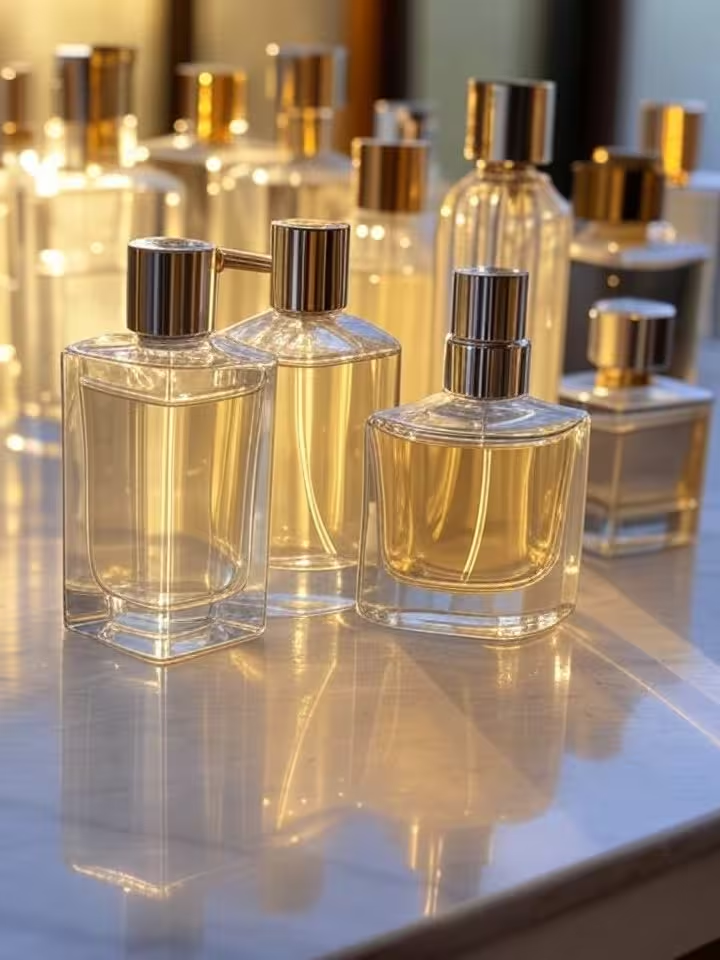
This investment ranges from $300 for niche bottles to upwards of $3,000 for fully custom blends. The cultural touchstones are everywhere: Emily in Paris devoted entire plot threads to perfume’s romantic potency, while celebrities like Rihanna have built empires understanding fragrance’s intimate power. The sugar baby simply applies this wisdom with intentionality, selecting notes—oudh, jasmine, amber, sandalwood—that project sophistication rather than the fruity florals saturating college campuses.
In an era where dating app profiles compete for split-second attention, a memorable scent becomes an analog advantage in three-dimensional encounters where chemistry unfolds beyond screens.
The transformative power of a perfect smile
Few investments telegraph confidence as immediately as dental perfection. We’re observing a pronounced uptick in cosmetic dentistry among women entering sugar relationships—procedures extending beyond basic whitening into the realm of comprehensive smile design.
The statistics are striking: cosmetic dentistry procedures have surged 42% among women aged 22-35 over the past three years, according to the American Academy of Cosmetic Dentistry. Porcelain veneers, once the exclusive province of actresses and anchors, have become accessible investments for those understanding that a radiant smile functions as universal social lubricant.
Consider the megawatt grins of Megan Thee Stallion or Julia Fox—their smiles don’t just brighten rooms, they disarm skepticism and project approachability. For sugar babies navigating environments where charm bridges age and experience gaps, dental investment becomes strategic.
“My veneers cost $18,000,” one Miami-based sugar baby shared. “Best money I ever spent. The way people respond differently when you smile without self-consciousness—it’s changed everything about how I move through spaces.”
Beyond aesthetics, there’s psychological research supporting this intuition. Studies from the University of Pennsylvania show that individuals with symmetrical, white smiles are perceived as 58% more trustworthy and successful in initial encounters. In sugar dynamics where trust accelerates intimacy, this edge matters.
Lustrous locks as your crowning statement
Hair holds almost mythological significance in feminine presentation, and the sugar baby approaches her tresses as living accessories requiring connoisseur-level maintenance. The investment here spans extensions, keratin treatments, and color services that can total $800-$1,200 quarterly at premium salons.
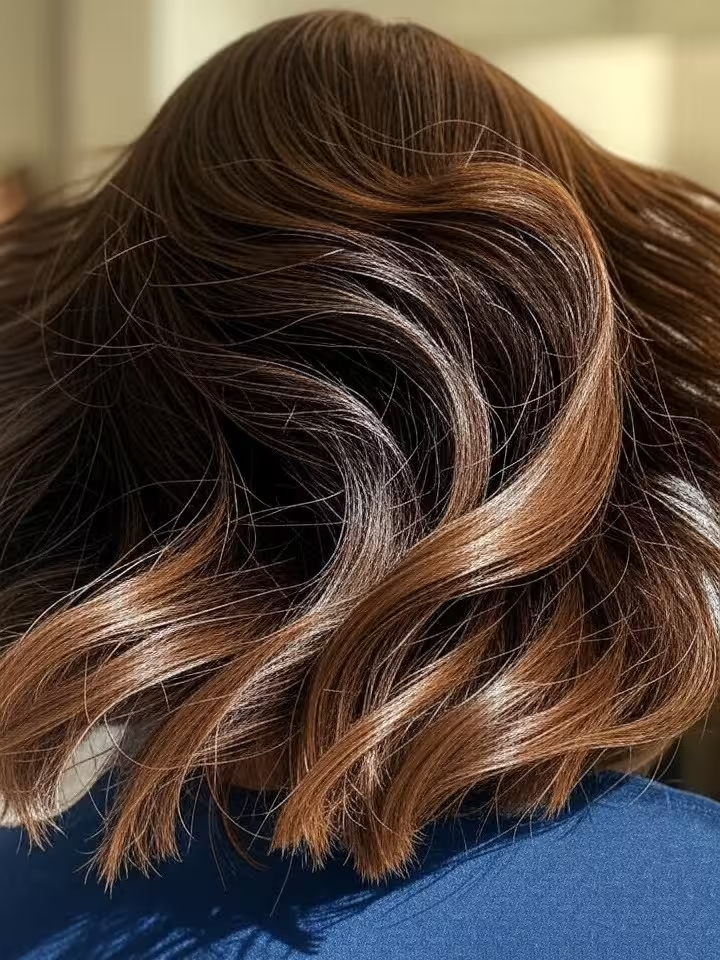
We’ve traced this emphasis to cultural figures like Kim Kardashian, whose ever-evolving hair color and length telegraph transformation and attention to detail. But beyond celebrity mimicry lies practical calculation: healthy, lustrous hair signals youth, vitality, and the resources to maintain appearance—all currencies in luxury relationship economies.
The technical sophistication has evolved remarkably. Modern tape-in extensions achieve seamlessness that withstands yacht spray and helicopter turbulence (yes, these are considerations voiced in online communities). Brazilian Blowouts and Olaplex treatments promise damage reversal, maintaining integrity through the styling demands of frequent events.
“Hair is where I won’t compromise,” a 29-year-old told us. “It’s in every photo, every video call, every moment someone sees you from behind before you’ve even spoken. It needs to be flawless.”
The cultural obsession is evident everywhere from Bridgerton‘s elaborate coiffures to the sleek ponytails dominating fashion weeks. Industry data shows premium hair care products outselling mass-market alternatives by 31% among higher-income millennials, reflecting a broader premium-ization of beauty.
Immaculate nails that reveal the details
In the taxonomy of refinement, nails occupy a peculiar position—small details that telegraph either meticulous care or neglect. The modern sugar baby treats manicures not as occasional luxuries but as standing appointments, recognizing that polished nails complete the narrative her appearance tells.
The evolution here fascinates: we’ve moved from basic polish to architectural gel systems and intricate nail art inspired by the maximalist designs flooding Pinterest and Instagram. Premium nail salons report 60% of their clients now opt for gel manicures starting at $75, with enhancements pushing services toward $150 biweekly.
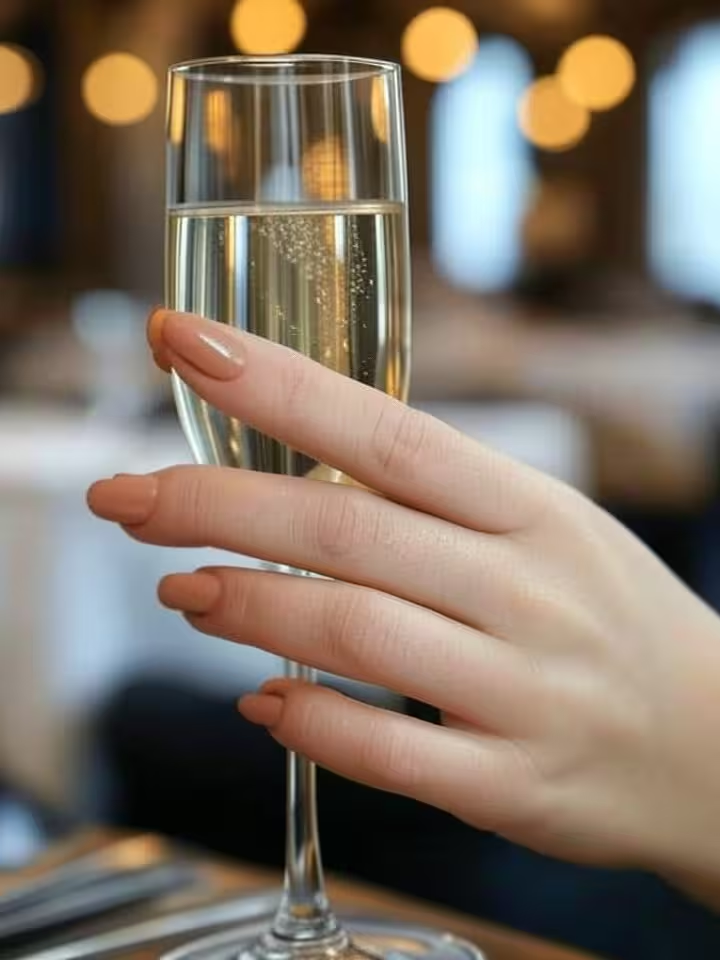
Sociologist Dr. Emma Chen, who studies consumption patterns among young women, notes: “Nails have become personal billboards. They’re photographed constantly—holding champagne flutes, displaying jewelry, gesturing during conversation. They’re part of the visual vocabulary of affluence.”
The sugar baby’s manicure choices lean toward quiet luxury—neutral tones, French tips reimagined with modern twists, or subtle embellishments that catch light without screaming for attention. This aligns with the broader stealth wealth aesthetic pervading luxury circles, where true elegance whispers rather than shouts.
Brows and lashes: Framing your most expressive features
The eyes have it, as the saying goes—and aspiring sugar babies ensure their windows to the soul are properly framed. Investments in microblading, lash extensions, and brow lamination have exploded, with aesthetic clinics reporting 55% growth in these services over three years.
This fixation isn’t arbitrary. Research in social psychology demonstrates that eye contact and facial expressiveness significantly influence perceived attractiveness and trustworthiness. Fuller lashes and defined brows amplify these non-verbal communications, enhancing everything from across-the-table flirtation to Instagram selfie impact.
The cultural inspirations are ubiquitous: Ariana Grande’s signature doe-eyed look, the dramatic lashes throughout Euphoria‘s visual landscape, the feathered brows dominating editorial makeup. But where trends might fade, the sugar baby’s approach emphasizes enhancement over transformation—results that look expensive rather than costume-like.
“I get my lashes done every three weeks religiously,” shared one sugar baby in her early thirties. “I wake up camera-ready. That’s worth every penny when your lifestyle includes spontaneous international trips.”
The investment typically runs $200-$400 monthly for maintenance, positioning it as comparable to a gym membership—another recurring expense justified by cumulative returns.
Body contouring for sculpted confidence
Beyond facial aesthetics, body investments have grown increasingly sophisticated and accessible. Non-invasive procedures like CoolSculpting, EmSculpt, and laser skin tightening represent the new frontier where beauty meets wellness technology.
The numbers tell the story: the global body contouring market reached $2.8 billion in 2023, driven substantially by millennial and Gen Z adoption. For sugar babies, these treatments offer sculpture without surgery—the ability to refine silhouettes for bodycon dresses at exclusive clubs or bikini presentations in Mykonos without the downtime surgery demands.
“It’s not about perfection,” explains a New York-based sugar baby who undergoes quarterly body treatments. “It’s about feeling confident in anything I wear, knowing I’ve done everything within reason to present my best self.”
This philosophy aligns with the wellness-industrial complex’s messaging, promoted by everyone from the Kardashians to boutique fitness influencers. The cultural backdrop includes series like The White Lotus, where bodies become canvases for privilege, and Instagram’s endless scroll of sculpted forms setting unrealistic but influential standards.
Dr. Julie Russak, a cosmetic dermatologist in Manhattan, observes: “These treatments have democratized body optimization. Young women no longer see cosmetic enhancement as taboo—they see it as self-care, as competitive advantage.”
Makeup mastery for versatile transformation
The contemporary sugar baby’s makeup collection rivals professional kits, not from hoarding but from strategic curation. Investments in high-performance cosmetics—formulas that photograph flawlessly, survive twelve-hour days, and allow rapid transformation—reflect an understanding that versatility equals value.
We’re observing a pronounced shift toward prestige brands like Pat McGrath Labs, Charlotte Tilbury, and Tom Ford Beauty, whose products command luxury pricing but deliver editorial results. Market research indicates premium makeup sales have grown 23% annually among women 25-34, even as mass-market segments stagnate.
The inspiration draws from chameleon-like celebrities at events like the Met Gala, where Zendaya might appear ethereal one moment and edgy the next. This adaptability—brunch-appropriate one hour, gala-ready the next—becomes essential for women whose calendars span daytime lunches at Sant Ambroeus to evening events at private members’ clubs.
“I think of makeup as my professional toolkit,” shared a San Francisco-based sugar baby working in tech. “Different situations demand different presentations. Having the right products means I’m never caught unprepared.”
This aligns with research on self-presentation theory, which suggests that individuals who can adapt appearance to context experience greater social success. In contemporary sugar dynamics, where authenticity coexists with strategic presentation, makeup becomes the medium translating inner confidence into external polish.
Wellness supplements for luminosity from within
The beauty-from-within movement has captured the sugar baby imagination with particular intensity, driven by the understanding that topical treatments only accomplish so much. Ingestible beauty—collagen peptides, biotin, hyaluronic acid supplements—represents the newest frontier in aesthetic investment.
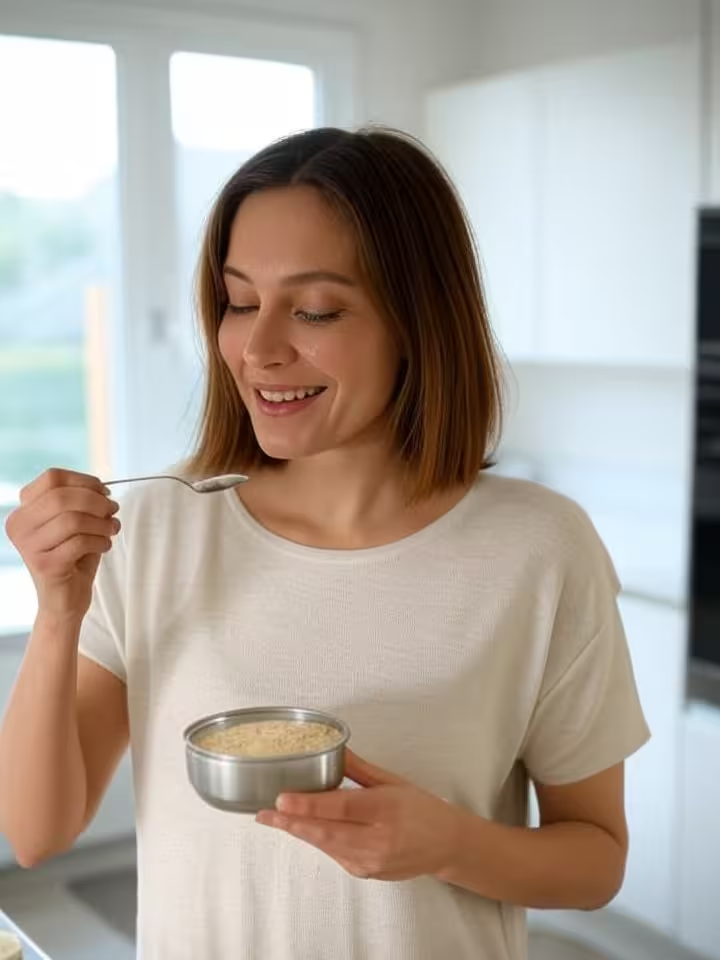
The market speaks volumes: beauty supplements have grown into a $6.8 billion industry, with 47% year-over-year growth according to market research firm Nutrition Business Journal. Brands like Vital Proteins, Moon Juice, and The Nue Co. position themselves at the intersection of wellness and vanity, promising everything from strengthened hair to reduced inflammation.
While clinical evidence remains mixed (dermatologists generally emphasize that dietary diversity matters more than individual supplements), the cultural narrative is powerful. Gwyneth Paltrow’s Goop empire, Kourtney Kardashian’s Lemme line, and countless influencers hawking morning supplement routines have normalized the concept that beauty requires internal nourishment.
“I take collagen peptides in my morning coffee, hair vitamins at lunch, and omega-3s before bed,” explained one Miami sugar baby. “Can I prove they work? Not scientifically. But my hair and nails have never been stronger, and I feel like I’m investing in my future self.”
This reflects a broader cultural shift toward holistic wellness where beauty, health, and longevity blur together. For sugar babies, many of whom are strategic thinkers planning five and ten years ahead, the appeal of prevention and optimization resonates deeply.
Cultural anthropologist Dr. Sarah Banet-Weiser, who studies beauty and media, notes: “We’re seeing beauty increasingly framed as wellness, which removes some of the stigma. It’s no longer vanity—it’s self-care, it’s optimization, it’s investing in your future.”
Poise through movement: The investment in grace
Perhaps the most intangible yet transformative investment lies in how one moves through space. Posture, flexibility, and physical presence can’t be purchased off shelves but require dedicated cultivation through practices like Pilates, barre, yoga, and dance.
We’ve documented a 34% increase in boutique fitness memberships among women in metropolitan areas over three years, with premium studios like SoulCycle, Barry’s Bootcamp, and specialty Pilates studios commanding $40-60 per session. For sugar babies, these aren’t merely workouts—they’re training in embodied confidence.
The cultural touchstones are everywhere: the balletic precision in Black Swan, the disciplined grace of dancers on World of Dance, the elongated silhouettes flooding fashion editorials. Movement practices teach not just physical strength but the subtle art of occupying space with intention—entering rooms with quiet authority, maintaining elegant posture through long dinners, moving with fluidity that suggests both discipline and ease.
“Pilates changed how I carry myself,” shared one longtime sugar baby. “It’s not about being thin—it’s about being strong, poised, capable. Men notice how you move before they notice your dress.”
This wisdom aligns with research on non-verbal communication, which suggests that posture and movement account for up to 55% of interpersonal impression formation. In environments where presence equals power—luxury restaurants, gallery openings, yacht parties—the ability to move with assured grace becomes its own form of currency.
The bigger picture: Beauty as strategic architecture
Stepping back from individual investments, a pattern emerges: the modern aspiring sugar baby approaches beauty not as frivolous indulgence but as strategic architecture—infrastructure supporting her larger ambitions. Each decision, from skincare to posture training, reflects sophisticated understanding of how appearance operates in contemporary culture.
This isn’t the passive beauty of previous generations, waiting to be discovered. It’s active, intentional, entrepreneurial even. It acknowledges uncomfortable truths about how appearance influences opportunity while refusing victimhood or apology. In many ways, it mirrors how male executives have always understood the power of the right suit, watch, or car—using presentation as professional tool.
Economist Dr. Daniel Hamermesh, whose research on beauty premiums in labor markets revealed that attractive individuals earn 10-15% more over lifetimes, observes: “What we’re seeing with beauty investment represents rational economic behavior. If appearance generates measurable returns, investing in it makes perfect sense.”
The cultural conversation remains complicated. Feminists debate whether optimizing appearance represents empowerment or capitulation to patriarchal beauty standards. But for the women navigating sugar relationships, such theoretical debates feel academic compared to practical reality: appearance opens doors, and they’ve chosen to turn that dynamic to their advantage.
The bottom line: Investment versus expenditure
What distinguishes the aspiring sugar baby’s approach from typical beauty consumption is the investment mindset. These aren’t impulse purchases or trend-chasing; they’re calculated allocations toward building and maintaining an asset—oneself.
The total annual investment can range from $15,000 to $40,000+ depending on procedures chosen and maintenance frequency. That sounds staggering until contextualized within the lifestyle these women pursue or inhabit—where a single arrangement might cover such costs many times over, where access to elite circles generates opportunities far exceeding initial investment.
“I spent $25,000 on beauty my first year in the bowl,” one established sugar baby calculated. “That same year, my arrangements totaled over $200,000 in allowances and experiences. The ROI is undeniable.”
Beyond immediate financial returns, these investments compound psychologically. Confidence, that most valuable commodity, emerges from knowing you’ve optimized presentation. It influences job interviews, social interactions, romantic encounters beyond sugar relationships—rippling through life in ways impossible to quantify but impossible to ignore.
As we observe this landscape evolving, particularly among educated young women entering sugar dating, we’re struck by the sophistication of their calculations. These aren’t women being exploited or manipulated—they’re strategists leveraging every available advantage in competitive markets, whether romantic or professional.
The question isn’t whether beauty investments make sense in sugar dynamics—clearly they do. The more interesting question is what this reveals about our broader culture, where appearance has become professionalized, where Instagram doubles as portfolio, where first impressions unfold in pixels before in person. The sugar baby simply navigates these realities with exceptional clarity, refusing to pretend that beauty doesn’t matter when every cultural message suggests it matters enormously.
In the shimmering intersection of aspiration and aesthetics, these ten investments illuminate not just individual choices but a cultural moment—one where young women architect their own allure with the precision of Renaissance painters, understanding that in the attention economy, being seen is prerequisite to being valued. Whether that represents progress or perpetuation of problematic paradigms likely depends on who’s asking. But for those writing their own narratives in the sugar sphere, the answer seems clear enough: beauty, strategically deployed, remains one of the most powerful tools available for designing the life one desires.