

In the shimmering undercurrents of modern relationships, sugar dating emerges not just as a transactional liaison but as a bold statement of agency. We’ve noticed how this niche, often shrouded in whispers and arched eyebrows, is quietly reshaping conversations around power, independence, and desire. Far from the archaic tropes of dependency, sugar dating invites a reevaluation through a feminist lens—one that celebrates women’s strategic navigation of a world still rigged against their financial autonomy. It’s a perspective that’s as provocative as it is timely, especially in an era where economic disparities continue to widen, and traditional paths to empowerment feel increasingly elusive.

Reclaiming power in a patriarchal economy
The economic landscape for women remains a labyrinth of glass ceilings and wage gaps. According to recent data from the World Economic Forum, it could take another 136 years to close the global gender pay gap at the current rate. Against this backdrop, sugar dating positions itself as a pragmatic rebellion. Women, particularly those in their twenties and thirties, are leveraging their charisma, intellect, and companionship to secure resources that traditional employment often withholds.
What’s more interesting is how this dynamic flips the script on conventional dating norms, where emotional labor is expected without compensation. We’ve seen this echoed in cultural narratives, from the sleek machinations in series like The Girlfriend Experience, where protagonists wield their allure as currency in a commodified world. It’s not about submission; it’s about subversion.
As one empowered sugar baby in her late twenties shared with us anonymously, “In a society that undervalues my skills in the boardroom, why shouldn’t I capitalize on the very attributes that men have objectified for centuries? It’s my choice, my rules.”
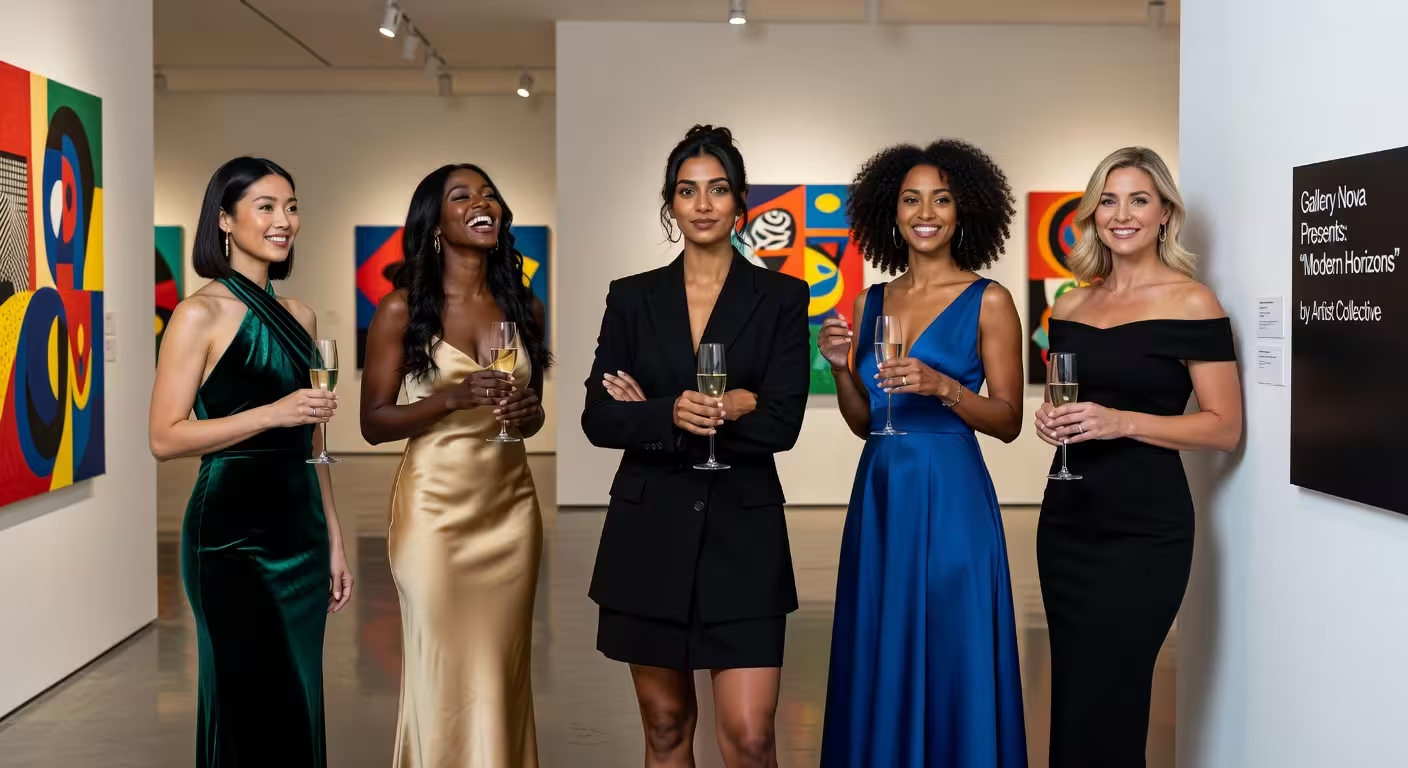
But here’s where it gets fascinating: sugar dating challenges the feminist critique of objectification by reframing it as empowerment. Instead of being passive recipients of male gaze, participants actively negotiate terms, setting boundaries that prioritize their well-being. This isn’t the damsel-in-distress fairy tale; it’s a calculated alliance where mutual benefit underscores every interaction. The very act of establishing parameters—financial expectations, time commitments, personal boundaries—becomes an exercise in assertive agency.
Dr. Lisa Wade, sociologist and author of American Hookup, observes that “women in transactional relationships often report higher levels of negotiation skills and boundary-setting confidence than those in traditional dating scenarios.” This assertion underscores a critical dimension: the educational value embedded within these arrangements extends beyond mere financial gain.
The intersection of autonomy and aspiration
Delving deeper, the feminist allure of sugar dating lies in its promotion of financial independence—a cornerstone of women’s liberation since the suffragettes. In the gig economy’s shadow, where platforms like OnlyFans and TikTok have normalized monetizing personal appeal, sugar arrangements feel like a natural evolution. Celebrities such as Cardi B have openly discussed their past in similar realms, framing it not as exploitation but as a savvy step toward self-sufficiency.
What we’re seeing is a generation of women who view these relationships as launchpads for broader ambitions, funding education, startups, or artistic pursuits that patriarchal structures might otherwise stifle. The reality, however, is layered. Data from apps catering to this lifestyle reveal that over 60% of sugar babies report using allowances for tuition or debt repayment, per internal surveys. This statistic underscores a broader zeitgeist: in a post-#MeToo world, where consent and agency are paramount, sugar dating offers a framework where women dictate the narrative.
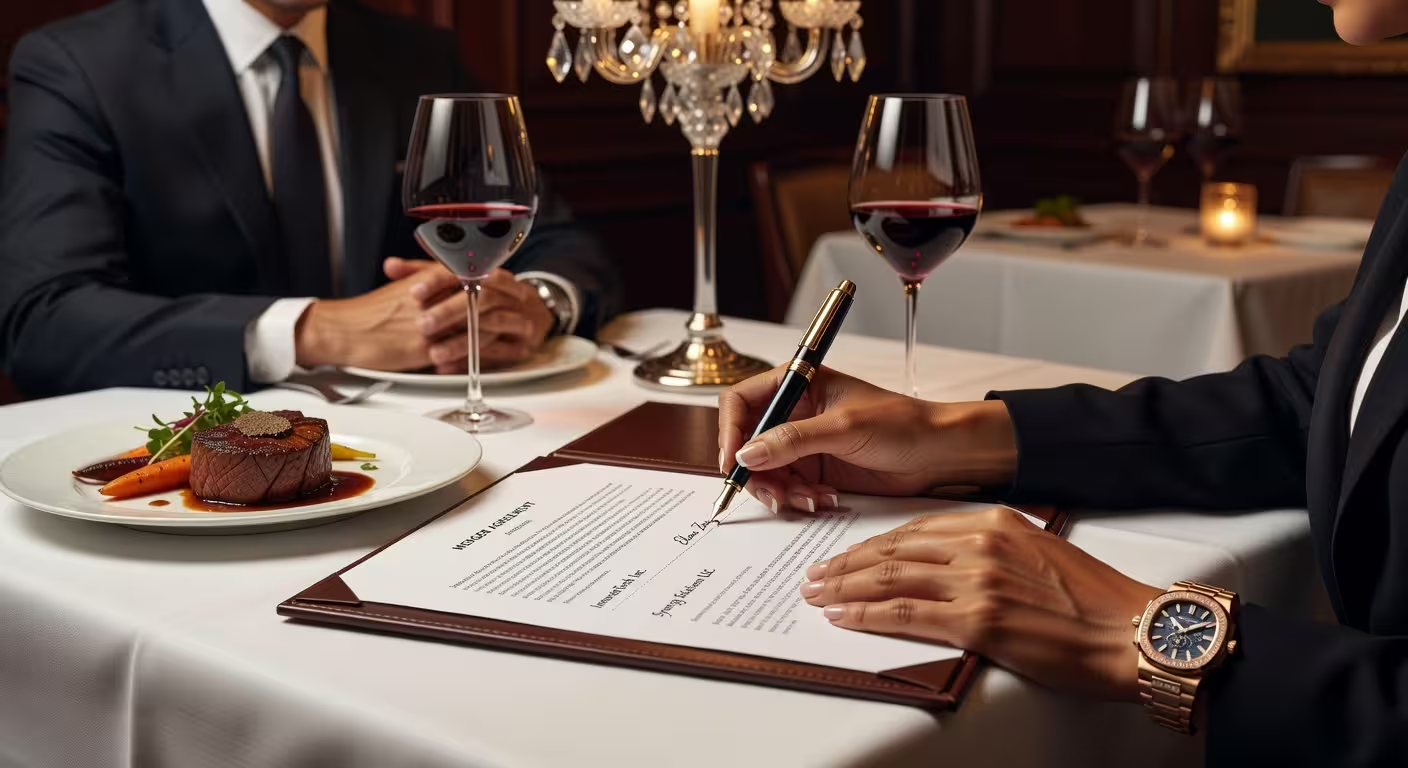
It’s a far cry from the unsolicited advances that plague everyday life; here, every engagement is consensual and compensated. As another anonymous source, a 35-year-old entrepreneur, confided, “Sugar dating funded my first business venture when banks laughed at my proposals. It’s feminist because it gave me the capital to break free from corporate chains designed by men for men.”
Such stories illuminate how these arrangements can serve as equalizers, bridging the chasm between aspiration and reality in an unequal society. The phenomenon echoes what economist Mariko Chang identifies as the “wealth gap”—the disparity in asset accumulation between genders, which often exceeds even the wage gap. For many women, particularly educated millennials and Gen Z participants, sugar relationships become strategic wealth-building mechanisms in economies that systematically disadvantage female earners.
Navigating the controversies: consent and critique
Of course, no discussion of sugar dating’s feminist potential would be complete without addressing the thorns. Critics argue it perpetuates gender stereotypes, reducing women to commodities in a male-dominated market. Yet, this view overlooks the nuanced agency at play. We’ve observed a shift on social media platforms like Instagram, where influencers subtly nod to sugar lifestyles through luxurious travel posts and enigmatic captions, fostering communities that emphasize empowerment over exploitation.
What’s more intriguing is the parallel with historical feminist icons who navigated power imbalances strategically. Think of figures like Cleopatra, whose alliances were as much about political savvy as romance—echoes of which resonate in today’s sugar dynamics. In the current cultural moment, amid rising discussions on sex work decriminalization, sugar dating aligns with broader calls for bodily autonomy.

It’s a controversial stance, but one that posits these relationships as acts of resistance against systemic inequities. The feminist case strengthens when considering intersectionality. For women of color or those from marginalized backgrounds, sugar dating can circumvent barriers that traditional feminism sometimes fails to address. As one participant in her early thirties noted, “In a world where my resume gets overlooked because of my name or skin tone, this is my way of leveling the playing field. It’s not ideal, but it’s real.”
Roxane Gay, cultural critic and author, has written extensively about choice feminism’s complexities, noting that “true empowerment requires acknowledging the structures that limit choice while respecting individual agency within those constraints.” This nuanced perspective proves essential when examining sugar relationships—neither wholly liberating nor entirely oppressive, but rather existing in the gray spaces where women negotiate survival and aspiration simultaneously.
The bigger picture: economics, culture, and shifting paradigms
The contemporary sugar dating landscape doesn’t exist in a vacuum. It’s intimately connected to broader economic trends that have reshaped how younger generations approach work, relationships, and financial security. The traditional employment contract has fractured, replaced by gig work, portfolio careers, and hustle culture. In this context, sugar arrangements become another form of entrepreneurial self-management—what some scholars term intimate labor.
We’re witnessing this shift accelerate across demographics. Student loan debt in the United States alone exceeds $1.7 trillion, with women holding nearly two-thirds of that burden. Housing costs in major metropolitan areas have skyrocketed beyond wage growth. Against these realities, the feminist critique of sugar dating as “selling out” begins to feel disconnected from the lived experiences of women facing genuine economic precarity.
A 26-year-old law student we spoke with articulated this tension beautifully: “My grandmother’s generation fought for the right to work. My mother’s generation fought for equal pay. My generation is fighting just to survive capitalism. If sugar dating helps me graduate debt-free and start my career on solid ground, that’s feminist praxis in 2025.”
The cultural conversation has evolved accordingly. What was once relegated to whispered confessions now surfaces in mainstream media with increasing frequency. From Euphoria‘s unflinching portrayals of transactional intimacy to TikTok’s #SugarBabyDiaries hashtag garnering millions of views, the narrative is shifting from judgment to curiosity, from moral panic to pragmatic acknowledgment.
This normalization doesn’t occur in isolation. It parallels broader acceptance of non-traditional relationship structures—polyamory, open relationships, conscious uncoupling—all representing departures from the nuclear family model that served patriarchal capitalism so efficiently. As relationship anarchist author Andie Nordgren writes, “relationship structures should serve the people in them, not the other way around.”
The evolving zeitgeist: from taboo to trend
As we survey the cultural horizon, sugar dating’s feminist undertones gain traction amid evolving attitudes toward relationships. The rise of polyamory and non-traditional partnerships, popularized by celebrities like Willow Smith, signals a departure from monogamous orthodoxy. Sugar arrangements fit neatly into this mosaic, offering flexibility that rigid societal expectations often deny.
But here’s where it gets fascinating: the pandemic accelerated this trend, with economic instability pushing more women toward alternative income streams. Reports indicate a 25% uptick in sugar dating app sign-ups during lockdowns, reflecting a collective pivot toward self-preservation. In this light, sugar dating isn’t merely controversial; it’s a mirror to our times, revealing how women are rewriting rules in a game stacked against them.
We’ve noticed, too, how pop culture weaves these threads into mainstream discourse. From viral TikTok confessionals to subtle nods in Netflix dramas like Emily in Paris, where luxury and ambiguous patronage intertwine, the narrative is shifting. The quiet luxury aesthetic that dominates current fashion sensibilities—think Loro Piana cashmere and unmarked Hermès—mirrors the discretion many sugar babies employ in navigating their arrangements.
It’s a perspective that invites us to question: if feminism is about choice, why exclude those who choose this path? The answer, as with most complex social phenomena, resists binary thinking. What matters is the context of choice—the structural conditions that shape which options become available and appealing.
What this means for modern feminism
The feminist movement has always contained multitudes, from radical separatists to corporate lean-in advocates. Sugar dating introduces yet another dimension to this spectrum, one that forces uncomfortable reckonings with how we value different forms of labor, intimacy, and strategic navigation of patriarchal systems.
Some feminists will never accept transactional relationships as liberatory, viewing them as capitulations to objectification. Others see them as tactical maneuvers within capitalist patriarchy—not ideal, but rational responses to material constraints. Still others celebrate them as exercises in female sexual and economic agency, reclamations of power long denied.
Perhaps the most productive approach lies in acknowledging all these perspectives simultaneously. As we’ve explored throughout contemporary sugar relationships, the reality defies neat categorization. What emerges instead is a portrait of women as strategic actors, making calculated decisions within imperfect systems, leveraging available resources toward self-determined goals.
The question isn’t whether sugar dating is feminist in some absolute sense, but rather: does it expand women’s practical options? Does it enhance their negotiating capacity? Does it fund endeavors that traditional structures obstruct? For many participants, the answer is unequivocally yes.
The bottom line
Ultimately, the feminist case for sugar dating rests on its potential to disrupt entrenched power structures through individual action. It’s a lens through which we view women’s ingenuity in reclaiming control over their bodies, time, and futures. As societal norms continue to evolve, these arrangements may well become less controversial, more commonplace—a testament to the adaptability of feminist thought.
In reflecting on this, one can’t help but appreciate the sophistication with which participants navigate their worlds. As a 28-year-old artist told us, “It’s not about the sugar; it’s about the sweetness of autonomy in a bitter economy.” Such insights remind us that in the luxurious tapestry of modern life, sugar dating offers a controversial yet compelling thread of empowerment.
The conversation will undoubtedly continue, evolving as economic conditions shift and cultural attitudes transform. What remains constant is women’s capacity for strategic self-determination—whether that manifests in boardrooms, classrooms, or the carefully negotiated terms of a sugar arrangement. The feminist project has always been about expanding women’s possibilities. Perhaps, in ways both provocative and pragmatic, sugar dating represents one more frontier in that ongoing liberation.