
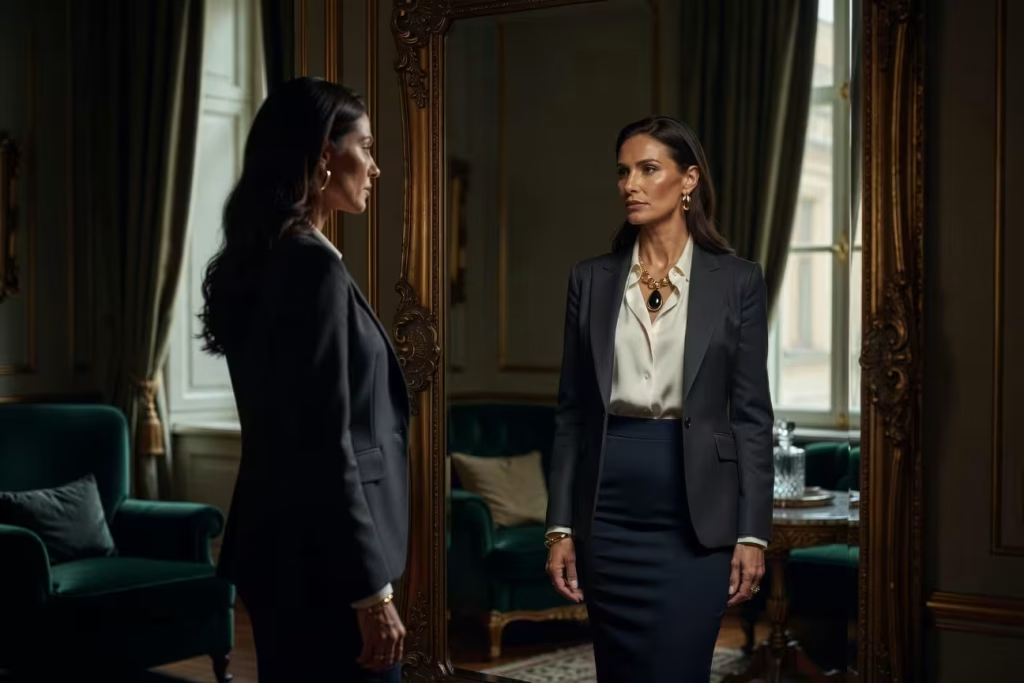
In the shimmering undercurrents of modern relationships, where luxury and secrecy intertwine like the threads of a Hermès scarf, we’ve noticed a rising archetype: the married sugar baby. She’s not the wide-eyed ingénue of yesteryear, but a woman navigating the complexities of commitment and desire with the precision of a seasoned diplomat. What we’re witnessing in this evolving landscape is a quiet revolution, one that challenges the monolithic narratives of monogamy and fidelity.
According to recent surveys from dating platforms catering to affluent arrangements, nearly 15% of sugar babies report being in committed relationships—a figure that’s doubled in the last five years amid shifting societal norms. But here’s where it gets fascinating: these women aren’t merely dabbling in dalliances; they’re curating double lives that blend domestic stability with the thrill of high-stakes indulgence.
The woman who lives in two worlds
Take, for instance, the anonymous voice we’ll call Elena—a pseudonym, of course, to protect the delicate balance she maintains. In her early 40s, Elena is a marketing executive by day, a devoted wife and mother in the suburbs, and, in stolen evenings, a sugar baby to a discreet benefactor who funds her penchant for bespoke jewelry and spontaneous trips to the Amalfi Coast.
“It’s not about betrayal; it’s about expansion,” Elena confides over an encrypted video call, her voice steady and unapologetic. “My marriage provides the foundation, the everyday rhythm. But this other life? It’s the sparkle, the reminder that I’m more than just the roles I’ve accumulated.”

Her words echo a broader zeitgeist, one amplified on platforms like TikTok and Instagram, where hashtags like #SecretLuxury and #DualRealities garner millions of views. Celebrities, too, subtly nod to this duality—think of the whispered rumors surrounding power couples who maintain open secrets, much like the plotlines in series such as Succession, where personal entanglements fuel empires without toppling them.
What’s more intriguing is how these double lives reflect a cultural pivot toward fluidity in relationships. We’ve observed that in an era dominated by remote work and digital anonymity, the boundaries between public and private selves blur effortlessly. Elena describes her routine with the elegance of a well-orchestrated ballet: mornings devoted to family breakfasts and school runs, afternoons to corporate strategy sessions, and select nights to clandestine dinners at Michelin-starred hideaways.
“Technology makes it seamless,” she notes. “Apps for scheduling, VPNs for privacy—it’s all part of the modern toolkit.”
The economics of dual existence
The reality, however, is layered with nuance. Data from relationship studies indicate that women in such arrangements often report higher levels of personal satisfaction, attributing it to the financial autonomy that sugar dynamics provide. In Elena’s case, her benefactor’s generosity has allowed her to invest in a side venture—a boutique line of artisanal perfumes—without dipping into the family savings.
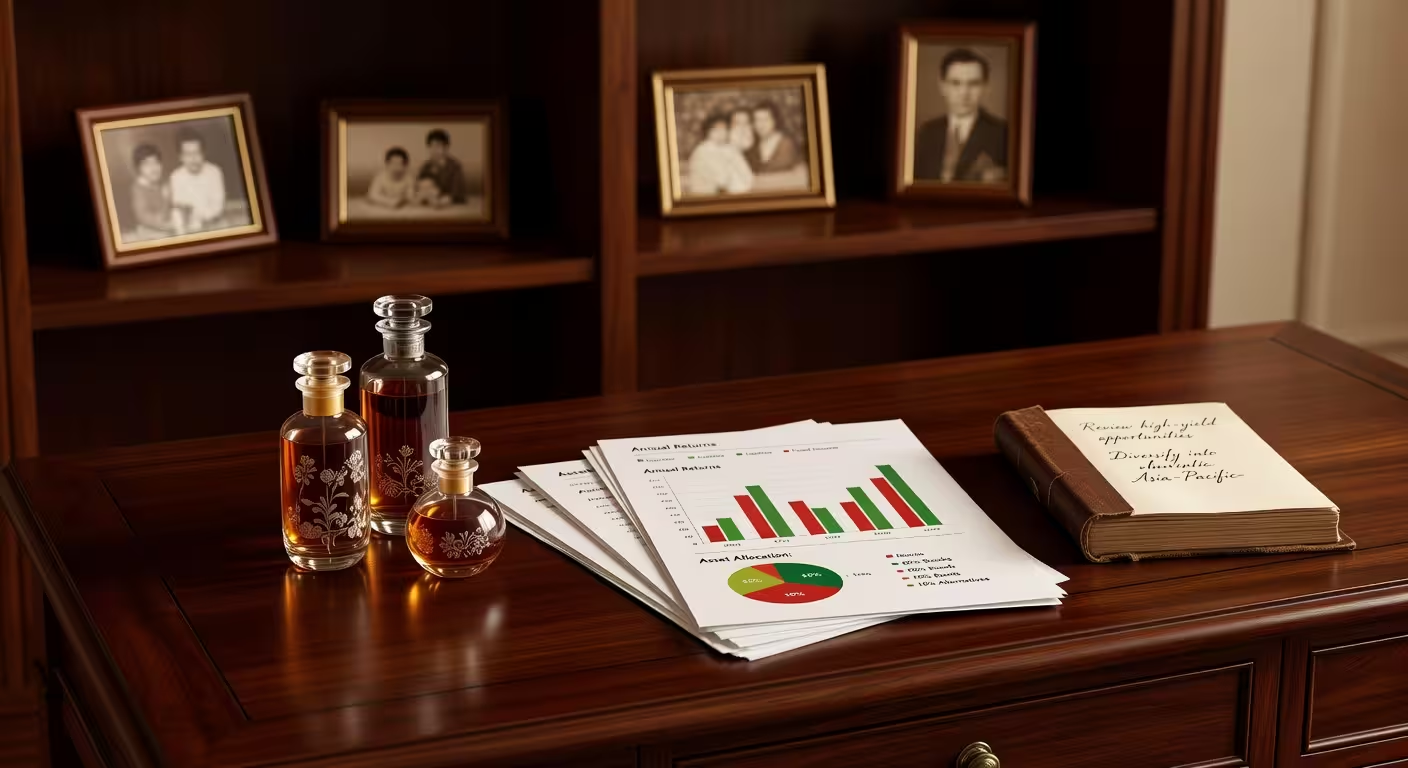
This empowerment resonates with the broader evolution toward autonomy and ambition permeating the sugar world, where women subtly allude to “sponsored lifestyles” that mirror sugar arrangements, sans the explicit labels. As Dr. Wednesday Martin, author of Untrue, has noted in various interviews: “Women’s sexuality and agency have been historically policed. What we’re seeing now is a reclamation—not through promiscuity, but through strategic, empowered choices.”
Transitioning to the broader implications, we’ve seen how economic pressures amplify this trend. With inflation biting into middle-class comforts, more married women are turning to sugar arrangements as a sophisticated side hustle. Reports suggest that in urban centers like New York and Los Angeles, sugar dating apps have seen a 20% uptick in profiles from those listing “married” or “in a relationship” statuses.
Elena’s story underscores this: “It’s not greed; it’s pragmatism. Why struggle when you can align with someone who appreciates your company and compensates accordingly?”
The emotional architecture of compartmentalized lives
Yet, the fascination deepens when we consider the emotional architecture of these lives. Elena speaks of the compartmentalization required, likening it to the compartmentalized worlds in films like The Talented Mr. Ripley, where identities shift like shadows.

“There’s a thrill in the secrecy, but also a weight,” she admits. “You learn to savor the moments without letting them bleed into each other.” This sentiment aligns with emerging trends in psychology, where experts note a surge in discussions around “polyamory lite”—not full-fledged open relationships, but selective expansions that preserve the core partnership.
As one sugar baby in her 30s told us, preferring to remain unnamed: “It’s like having a secret garden. My marriage is the house, solid and familiar, but this other space is where I bloom in ways I never could at home.” Her analogy captures the poetic underbelly of these arrangements, evoking the lush, hidden retreats in novels that symbolize untamed desires.
In the current cultural moment, with shows like The White Lotus exposing the hypocrisies of the elite, such narratives feel less like outliers and more like reflections of a society grappling with authenticity amid artifice. The parallels are impossible to ignore: women navigating luxury, secrecy, and desire in ways that challenge conventional relationship models.
Power, agency, and the new feminine archetype
But here’s where it gets truly captivating—the interplay of power dynamics. In Elena’s world, she’s not the passive recipient but the architect of her narrative. “I set the terms,” she asserts. “It’s empowering to know that my allure commands such value.”
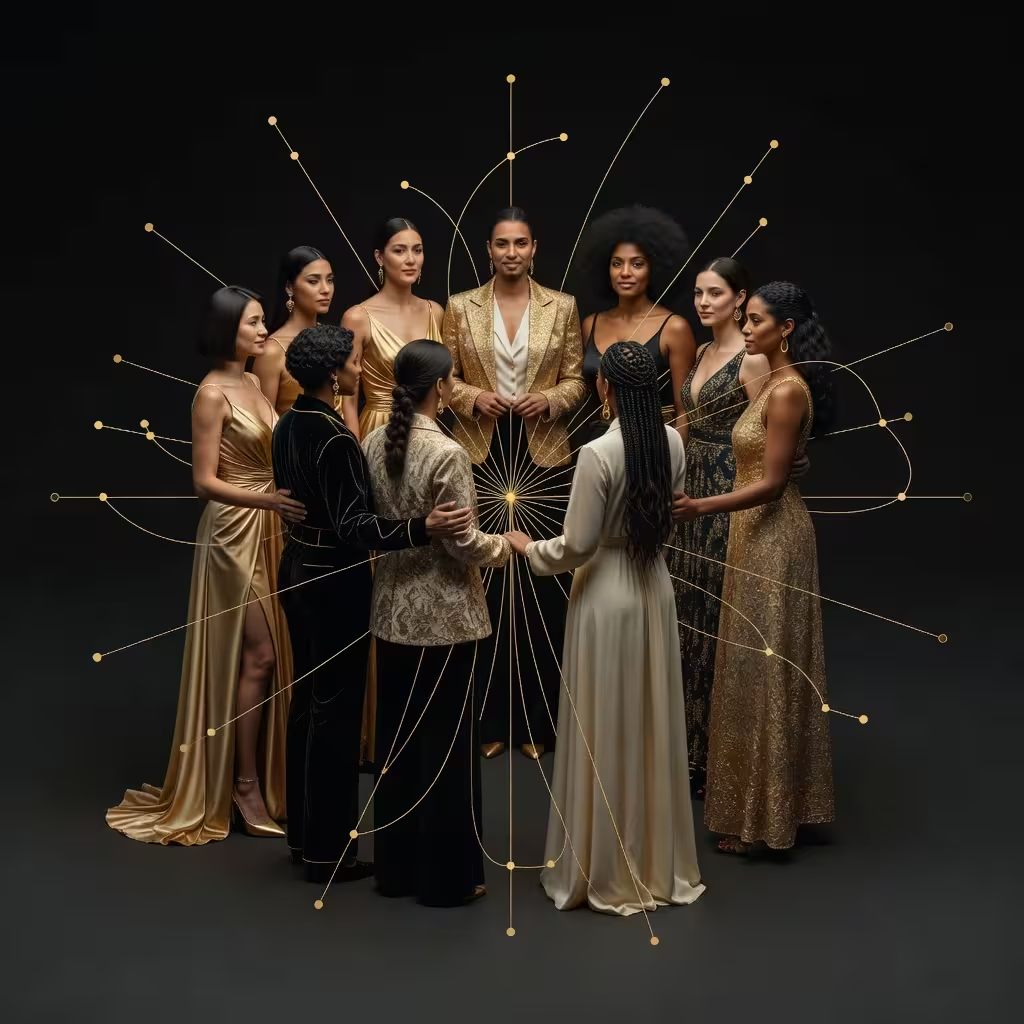
This flips the script on traditional sugar stereotypes, aligning with feminist reclamations seen in pop culture, from Cardi B’s unfiltered anthems of self-worth to the nuanced portrayals in Euphoria, where young women navigate transactional intimacies with agency. As sociologist Dr. Pepper Schwartz has observed in her research on modern relationships: “We’re witnessing a shift from women as recipients of resources to women as negotiators of their own terms—economically, sexually, and emotionally.”
The zeitgeist, influenced by a post-pandemic craving for connection and luxury, further fuels this duality. We’ve noticed a surge in wellness retreats and luxury escapes marketed as “discreet getaways,” subtly catering to those leading multifaceted lives. Elena recounts a weekend in a private villa in Saint-Tropez, where the line between her worlds dissolved in champagne toasts and ocean views.
“It’s intoxicating,” she says, “to step into a version of yourself that’s unburdened by expectations.” This mirrors the allure of seasonal luxury circuits where anonymity and opulence converge.
The digital veil: Community in the shadows
Delving deeper, the anonymity inherent in these arrangements adds a layer of intrigue, much like the masked balls of Venetian lore, now digitized. On forums and private groups, married sugar babies share veiled anecdotes, fostering a community that’s as supportive as it is shadowy.
As another anonymous source, a 35-year-old entrepreneur, shared: “We exchange stories not for advice, but for solidarity. Knowing others thrive in this balance makes it sustainable.” For those seeking guidance in navigating these complex arrangements, resources like dedicated sugar baby communities offer both discretion and connection—spaces where experiences are shared without judgment.
The allure of these digital sanctuaries lies in their ability to normalize what mainstream society still struggles to accept. In an age where younger generations are already redefining relationship norms, married sugar babies represent perhaps the most complex iteration—women who refuse to choose between security and excitement, domesticity and desire.
The bigger picture: Redefining modern femininity
In reflecting on these double lives, what emerges is a portrait of modern femininity that’s multifaceted and unapologetic. Elena’s candor reveals not a fracture, but a mosaic—pieces of domesticity, ambition, and sensuality fitting together in unexpected harmony. As societal conversations evolve, propelled by viral threads on Twitter dissecting non-traditional relationships, it’s clear this isn’t a fleeting trend but a reshaping of intimacy’s landscape.
Economist and author Marina Adshade, who studies the economics of sex and love, has noted: “The commodification of intimacy isn’t new—what’s new is women’s transparent negotiation of it. They’re applying market logic to relationships in ways that prioritize their own welfare.”
What we’re witnessing isn’t simply about infidelity or financial opportunism. It’s about women constructing lives that accommodate multiple dimensions of identity—the devoted partner, the ambitious professional, the sensual being. In a culture that has long demanded women choose between Madonna and Magdalene, these women are choosing and.
The bottom line
The allure lies in the balance, the artful dance between worlds that promises both security and exhilaration. For those attuned to this rhythm, it’s a reminder that life’s luxuries often hide in the spaces between commitments, waiting to be claimed with grace and discretion.
As Elena concludes our conversation, there’s no trace of guilt or defensiveness in her voice—only a quiet confidence that she’s found a formula that works. “People think you have to sacrifice one thing for another,” she says. “But I’ve learned you can hold multiple truths at once. The trick is knowing which world needs you when, and having the courage to inhabit both fully.”
In an era defined by fluidity—of gender, identity, work, and now relationships—the married sugar baby emerges not as an anomaly but as a harbinger. She’s navigating terrain that many will eventually explore, whether through similar arrangements or simply by acknowledging the multitudes they contain. And in her discretion, her strategic compartmentalization, and her unapologetic pursuit of pleasure and autonomy, she offers a compelling answer to an age-old question: Can you have it all?
Perhaps not in the way we once imagined. But in ways far more interesting.