
In the shimmering undercurrents of contemporary luxury lifestyles, a subtle yet profound shift has taken hold. The sugar baby archetype—once whispered about in hushed tones amid opulent soirées and relegated to the margins of polite society—is evolving into something far more dynamic, deliberate, and self-assured. No longer confined to outdated stereotypes or one-dimensional portrayals, today’s sugar babies are rewriting the narrative, blending ambition with allure in ways that reflect broader cultural tides around female empowerment, economic strategy, and personal agency.
What makes this evolution particularly fascinating is how seamlessly it mirrors the zeitgeist of our era—where autonomy meets indulgence, where strategic thinking intersects with desire, and where women are increasingly unwilling to apologize for pursuing what they want on their own terms.
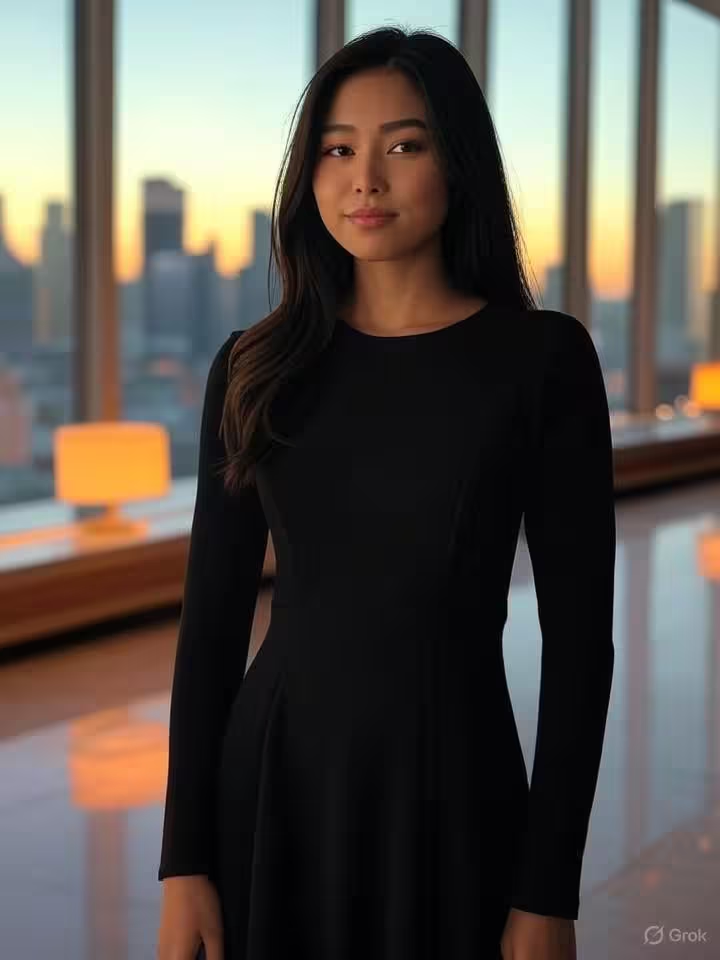
The demographic shift: Older, wiser, more strategic
Consider the data. According to recent surveys from digital platforms catering to affluent connections, the average age of sugar babies has climbed steadily over the past five years, now hovering around 28—a significant jump from the early twenties demographic that dominated a decade ago. This isn’t mere coincidence or statistical noise; it signals a generation that views these arrangements not as fleeting escapades or desperate measures, but as strategic steps in a larger, carefully constructed life plan.
Dr. Wednesday Martin, cultural anthropologist and author of Untrue, has noted in her research on female sexuality and power that “women are increasingly making pragmatic choices about relationships that optimize their economic and social position.” While Martin wasn’t speaking specifically about sugar relationships, her observation captures something essential about this demographic shift: the empowered sugar baby isn’t stumbling into arrangements—she’s engineering them.
We’ve watched this play out across social media, where influencers on TikTok and Instagram subtly nod to the sugar lifestyle through carefully curated content: designer hauls without obvious income sources, exotic getaways that seem to materialize spontaneously, luxury apartments in cities where the median rent would consume an entire entry-level salary. These posts amass millions of views, sparking both aspiration and conversation. It’s a quiet revolution, one that echoes the unapologetic confidence of celebrities like Cardi B, who has openly discussed her past in similar dynamics without a hint of shame or regret.
From participant to architect
But here’s where the narrative becomes truly compelling: the empowered sugar baby isn’t just participating in a system—she’s orchestrating it. In cities like New York, Los Angeles, and Miami, where the cost of living rivals the sparkle of a Cartier Love bracelet, young professionals are leveraging these relationships to fuel careers, fund entrepreneurial ventures, and access networks that might otherwise remain frustratingly out of reach.
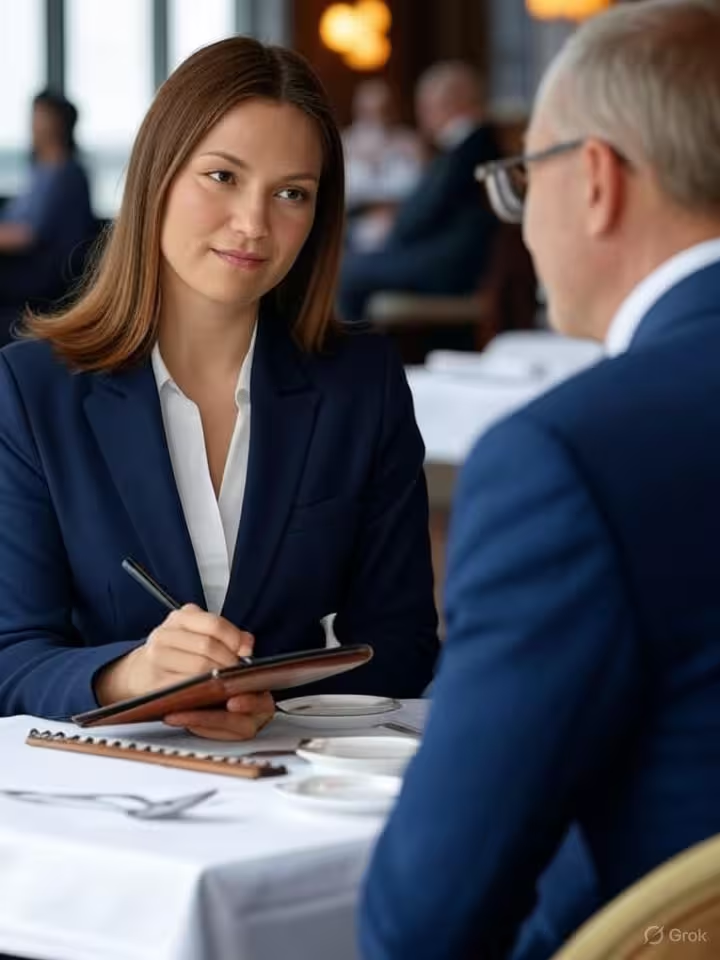
“It’s not about dependency; it’s about acceleration,” a sugar baby in her early thirties—a rising tech entrepreneur—confided to us over a discreet lunch at The Polo Bar in Manhattan. Her company, a sustainability-focused app, recently closed a seed round, and she credits her sugar arrangement with providing not just financial runway but invaluable mentorship. “The right connection opens doors that ambition alone might take years to unlock. I’m not waiting for permission or working three jobs to bootstrap. I’m using every resource available to me.”
Her words capture a sentiment rippling through the community, where financial support increasingly intertwines with mentorship, industry connections, and intellectual exchange—creating a symbiotic relationship that feels less transactional and more transformative. As economist Marina Adshade notes in her work on the economics of sex and love, “relationships have always involved exchange—the question is whether that exchange is acknowledged honestly or hidden beneath layers of romantic fiction.”
The mentorship dimension
This mentorship aspect deserves particular attention. In conversations with women across the sugar spectrum, a consistent theme emerges: the most successful arrangements aren’t purely financial—they’re educational. Sugar daddies who are seasoned executives, investors, or industry leaders often provide insights that would cost thousands in business school or years of trial-and-error.
“He taught me how to read a balance sheet, how to negotiate with investors, how to navigate rooms where I’m the youngest person by two decades,” shared a 26-year-old sugar baby and aspiring venture capitalist based in San Francisco. “That knowledge is worth more than any allowance.”
Cultural currency: When pop culture validates the lifestyle
The reality of this evolution is layered with fascinating cultural nuance. Streaming series like Netflix’s The Crown, HBO’s Succession, and even White Lotus have subtly influenced perceptions, portraying power dynamics in elite circles that unmistakably resonate with sugar arrangements. These shows don’t just entertain—they normalize the idea of strategic alliances, where emotional intelligence, charm, and social savvy become currencies as valuable as any trust fund or inheritance.

On platforms like Reddit’s sugar lifestyle forums, anonymous threads buzz with sophisticated discussions about negotiating terms that prioritize mutual respect, clear communication, and genuine connection—a far cry from the one-sided, exploitative portrayals of yesteryear. Users share contract templates, discuss red flags with the acuity of seasoned lawyers, and support each other through the emotional complexities these arrangements can involve.
“The community has matured exponentially,” explains one longtime member who’s been in the bowl for nearly a decade. “When I started, it felt isolating and taboo. Now, there’s a shared vocabulary, ethical frameworks, and genuine mentorship happening between experienced SBs and newcomers. We’re building something that feels almost… professional.”
The European contrast: Intellectual luxury
Shifting our gaze across the Atlantic, Europe offers a compelling contrast in how the sugar lifestyle manifests. In Paris, London, and increasingly destinations like Saint-Tropez, sugar babies often embody a more bohemian elegance, blending high fashion with intellectual pursuits and cultural sophistication.
Data from European dating platforms indicates a 15% increase in profiles emphasizing shared cultural experiences—museum visits, theater premieres, literary salons—over purely material gifts. This shift suggests a maturation of the lifestyle that aligns with the current wave of feminist reclamation visible across European culture, from the bold fashion statements at Paris Fashion Week to the raw honesty of contemporary memoirs exploring unconventional paths to success.
“In Europe, there’s less emphasis on the transactional and more on the experiential,” notes a 29-year-old British sugar baby and doctoral candidate in art history. “My arrangement funds my research, yes, but it also grants me access to private collections, introduces me to curators and collectors, and enriches my academic work in ways that feel organic rather than mercenary.”
Technology as the great equalizer
What’s particularly interesting is how technology has fundamentally altered the power dynamics of sugar relationships. The apps and platforms designed for these connections now feature sophisticated algorithms that match based on lifestyle compatibility, intellectual interests, and shared values—not just wealth on one side and youth on the other.
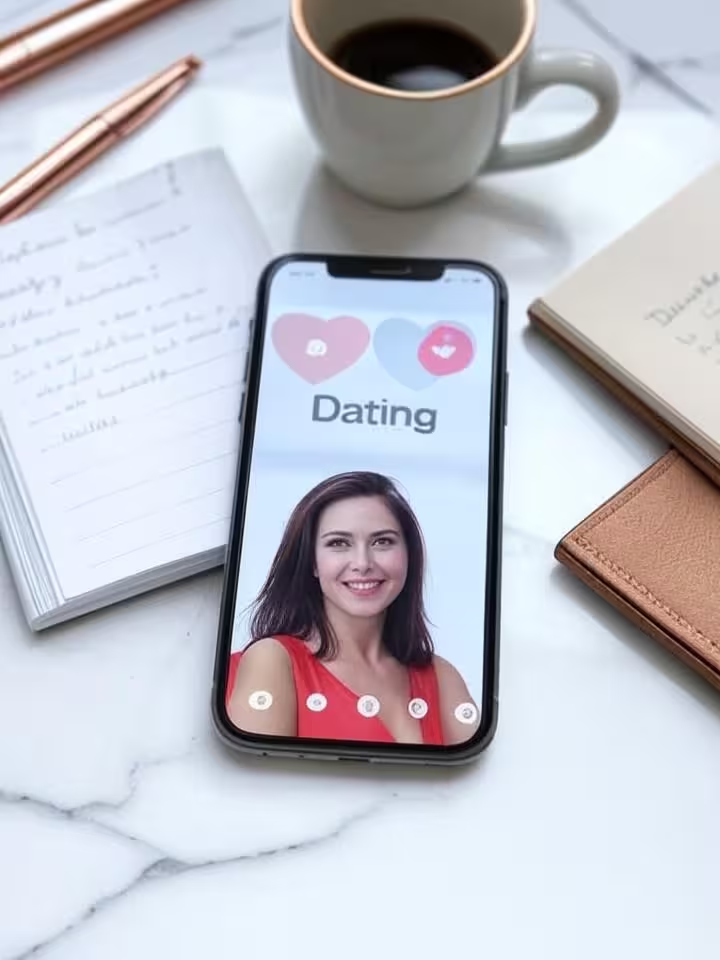
We’ve observed users curating profiles that prominently highlight their own achievements: degrees from Ivy League institutions, startup ventures, artistic portfolios, published work, athletic accomplishments. This isn’t accidental—it’s a deliberate strategy to turn the tables on traditional power imbalances, positioning sugar babies not as supplicants but as equals bringing valuable currency of their own to the exchange.
“I bring my creativity, my network in the art world, and honestly, my youth and energy to the table,” shared a 25-year-old artist based in Miami. “He brings resources, business acumen, and connections in industries I’m trying to break into. Together, we’re building something bigger than either of us could alone. It’s collaborative, not hierarchical.”
This collaborative spirit is emblematic of a generation raised on sharing economies—Uber, Airbnb, co-working spaces—where traditional ownership models have given way to fluid, mutually beneficial arrangements. Economists are finally recognizing that sugar dating represents a microcosm of broader economic shifts around gig work, portfolio careers, and the monetization of personal assets.
The entrepreneurial sugar baby
Perhaps nothing illustrates the empowerment narrative more clearly than the surge in sugar babies using their arrangements as launchpads for entrepreneurial ventures. Economic uncertainties, amplified by recent global disruptions, have prompted many to diversify their approaches, treating allowances not as spending money but as seed capital.
Reports from financial analysts note a marked increase in sugar babies investing in:
- Personal brands and content creation – Building Instagram, YouTube, or TikTok presence that can generate independent income
- E-commerce ventures – Launching boutique fashion lines, jewelry brands, or lifestyle products
- Real estate investments – Acquiring rental properties or flipping homes in emerging markets
- Education and credentials – Funding graduate degrees, certifications, or specialized training that increase earning potential
“I viewed my arrangement as a two-year business plan,” explained a former sugar baby who now runs a successful sustainable fashion brand. “I knew exactly how much I needed to launch, and I treated the relationship professionally—delivering value while building my exit strategy. Now I’m financially independent, and ironically, my ex-SD became one of my first investors.”

Fashion as visual empowerment
We can’t discuss the empowered sugar baby without examining how fashion functions as both armor and declaration. The current quiet luxury movement has found particular resonance in sugar circles, where savvy women have learned that true power dresses in whispers, not shouts.
The empowered sugar baby dresses not to impress but to express—drawing from runways where designers like The Row, Loro Piana, and Brunello Cucinelli have elevated minimalism to an art form. It’s a visual language that communicates self-worth and insider knowledge, much like the bold aesthetics of entrepreneurs like Rihanna, whose Fenty empire embodies the fusion of glamour and grit, luxury and accessibility.
Fashion consultant and author Dana Thomas has written extensively about how “luxury has become democratized yet simultaneously more exclusive—it’s about knowledge and access rather than logos.” This perfectly captures the sartorial evolution we’ve observed: sugar babies commanding rooms with effortless poise, wearing pieces that signal sophistication to those who know, while remaining invisible to those who don’t.
The wellness dimension: Boundaries and emotional intelligence
Mental health and emotional well-being have emerged as critical—if quieter—undercurrents in contemporary sugar culture. With platforms incorporating wellness features and communities fostering open dialogues about boundaries, consent, and self-care, there’s a growing emphasis on the psychological dimensions of these arrangements.
“It’s empowering because I set the rules,” a 29-year-old consultant from Chicago told us. “But it requires profound self-awareness to keep it balanced. I see a therapist, I have clear boundaries, and I’m honest with myself about what I’m comfortable with. That self-knowledge is its own form of luxury.”
Psychologist Dr. Esther Perel, renowned for her work on modern relationships, has observed that “the quality of our relationships determines the quality of our lives.” While Perel hasn’t specifically addressed sugar relationships, her framework around negotiated intimacy, clear communication, and conscious choice provides valuable context for understanding why emotionally intelligent sugar babies report higher satisfaction and longer-lasting arrangements.
The importance of community
Interestingly, the rise of the empowered sugar baby has coincided with the formation of genuine community structures—both online and offline. Private forums, mentorship programs, and even occasional meetups provide spaces where women can share experiences, offer advice, and provide emotional support.
“Having other women who understand this lifestyle has been transformative,” shared one member of a private sugar baby collective. “We celebrate each other’s wins, troubleshoot challenges, and hold each other accountable to our standards. It’s sisterhood in the most unexpected context.”
The economic ripple effect
On a macroeconomic level, the sugar economy contributes significantly to niche luxury markets—from bespoke jewelry to private aviation, from high-end real estate to exclusive experiences. Industry estimates suggest this shadow economy bolsters luxury spending by billions annually, influencing trends that eventually trickle down to mainstream consumers.
We’ve observed how this influx supports emerging designers, artisanal brands, and experiential luxury providers who might otherwise struggle to find customers willing to pay premium prices. There’s an entire ecosystem of small businesses—personal shoppers, image consultants, travel planners, fitness trainers—whose client bases include significant numbers of sugar babies investing in themselves.
This economic dimension adds another layer to the empowerment narrative: sugar babies aren’t just benefiting individually—they’re moving money through the economy in ways that support other entrepreneurs and creatives, particularly women-owned businesses in the luxury sector.
The generational perspective
What distinguishes today’s empowered sugar babies from previous generations is perhaps best understood through a generational lens. Millennials and Gen Z have come of age in an era of economic uncertainty—student debt, housing unaffordability, stagnant wages despite rising productivity. Traditional paths to success feel increasingly mythical, particularly for women still contending with pay gaps and glass ceilings.
Against this backdrop, sugar dating represents a form of economic pragmatism that feels almost rational. Why struggle alone when resources exist that could accelerate your trajectory? Why pretend money doesn’t matter in relationships when it demonstrably does? Why accept traditional limitations when alternative paths exist?
Sociologist Dr. Eva Illouz, whose work examines capitalism and intimacy, argues that “modern relationships are increasingly shaped by market logic.” The empowered sugar baby, in this framework, isn’t an anomaly—she’s simply more honest about dynamics that exist across all relationships but are typically left unspoken.
The bigger picture: Autonomy in the age of choice
Zooming out, the zeitgeist reveals a world where traditional paths to success are being rerouted, questioned, and reimagined. Podcasts dissecting wealth disparities, viral TikToks celebrating “soft life” aesthetics, and broader cultural conversations about work-life balance all underscore a collective yearning for ease amid ambition, for pleasure alongside productivity.
The empowered sugar baby, in her contemporary form, embodies this pursuit—navigating the intersections of romance, finance, and self-discovery with a sophistication that captivates precisely because it refuses easy categorization. She’s neither victim nor villain, neither purely pragmatic nor hopelessly romantic. She’s complex, strategic, self-aware, and unapologetically luxurious.
The cultural reclamation
Perhaps most significantly, what we’re witnessing is a profound reclamation of narrative. For decades, stories about women in these arrangements were told by others—often men, often judgmentally, always incompletely. Now, women are telling their own stories, on their own terms, through their own platforms.
Memoirs, podcasts, anonymous essays, and social media content have created a counter-narrative that challenges stigma while refusing to sugarcoat (pun intended) the complexities. These stories don’t present sugar dating as either empowerment panacea or exploitative nightmare—they present it as one option among many, with distinct advantages and challenges that must be navigated with intelligence and self-knowledge.
Writer and cultural critic Roxane Gay has noted that “women telling their truths, particularly truths that make others uncomfortable, is inherently radical.” The empowered sugar baby, sharing her experiences without shame or apology, participates in this radical act of self-definition.
Looking forward: The evolution continues
As we consider where this evolution leads, several trends seem poised to intensify. The professionalization of sugar dating—with clearer norms, stronger communities, and more sophisticated platforms—will likely continue. The integration with broader entrepreneurial and career strategies will deepen. And the cultural conversation will grow more nuanced as more women speak openly about their experiences.
We may also see increased legal and social frameworks developing around these arrangements, as society grapples with how to understand relationships that blur traditional boundaries between romantic and economic.
What seems certain is that the empowered sugar baby isn’t a passing trend or cultural curiosity—she represents something fundamental about contemporary femininity, economics, and the ongoing negotiation of power in intimate relationships.
The bottom line
Ultimately, the rise of the empowered sugar baby reveals a broader truth about modern life: women are increasingly unwilling to choose between ambition and desire, between financial security and romantic connection, between playing by traditional rules and pursuing what actually works for their lives.
From the sun-drenched terraces of Beverly Hills to the historic boulevards of Paris, from Miami penthouses to London townhouses, the empowered sugar baby is redefining luxury on her terms, one elegant stride at a time. She’s not asking permission, seeking approval, or waiting for circumstances to align. She’s architecting her life with the resources available to her, bringing intelligence, strategy, and yes, empowerment to arrangements that have existed for centuries but are only now being openly discussed and deliberately designed.
The question isn’t whether this evolution will continue—it’s how society will adapt to a reality where women claim agency in spaces traditionally defined by their lack of it. And in that adaptation lies the true revolution: not in the arrangements themselves, but in who gets to define their meaning.