


As the Mediterranean sun dips low over azure waters, Saint-Tropez transforms into a glittering stage where luxury and liaison intertwine. This Riviera gem, once the playground of Brigitte Bardot and the jet-set elite, has evolved into a summer epicenter for the sugar baby circuit—a world where connections are as fluid as the rosé poured at beachside lounges. What we’re witnessing this season is a resurgence of old-world glamour blended with modern digital savvy, drawing a new generation of ambitious companions to its sun-drenched shores.
The allure begins with the geography itself. Nestled on the French Côte d’Azur, Saint-Tropez boasts over 300 days of sunshine annually, according to local tourism data, making it a perennial magnet for those seeking escapism. But beyond the postcard-perfect beaches and designer boutiques, the town pulses with an undercurrent of **discreet arrangements**. Yachts dot the harbor, each a floating testament to affluence, and it’s on these vessels that many sugar dynamics unfold. The summer influx—peaking in July and August with visitor numbers swelling to over 100,000—creates fertile ground for encounters that blend leisure with mutual benefit.
The cultural currency of Riviera romance
Consider the cultural references that echo this vibe. Series like *The White Lotus* capture the opulent isolation of such locales, where wealth whispers promises amid scenic splendor. Celebrities, from Leonardo DiCaprio’s infamous yacht parties to the Instagram feeds of influencers like Emily Ratajkowski, who often post from similar Mediterranean haunts, amplify the fantasy. On social media, hashtags like #TropezLife and #SugarSummer reveal a curated narrative of sun-kissed skin and champagne toasts, subtly nodding to the arrangements that fuel these lifestyles.
“It’s not just about the views; it’s the conversations on deck that open doors you never knew existed,” a 28-year-old sugar baby from London shared with us over espresso at Sénéquier. Her perspective reflects a broader truth: **the Mediterranean circuit trades as much in intellectual currency as it does in financial exchange**.
Sociologist Eva Illouz, author of *Consuming the Romantic Utopia*, has long argued that modern romance intertwines with economic considerations in ways previous generations wouldn’t acknowledge. “The vacation romance, particularly in luxury settings, serves as a laboratory for testing relational possibilities outside conventional structures,” she notes. Saint-Tropez exemplifies this phenomenon—a liminal space where everyday rules suspend and new scripts emerge.
A shifting demographic landscape
What’s particularly fascinating is the shift in demographics. Traditional images of sugar arrangements might evoke stark generational divides, but in Saint-Tropez, we’re witnessing a more nuanced tableau. Data from global dating platforms indicate a 25% rise in European sugar connections during summer months, with many participants in their 30s and 40s—seasoned professionals seeking respite from high-stakes careers.

The reality is that these circuits aren’t confined to archetypes. They encompass **entrepreneurs**, **artists**, and even **tech innovators** who view the summer sojourn as a strategic interlude. One longtime member of the community explains: “The outdated sugar daddy stereotype doesn’t capture what’s happening here. These are sophisticated individuals—both sides—negotiating arrangements that honor autonomy while acknowledging power dynamics.”
The zeitgeist here leans toward empowerment through elegance, where the exchange isn’t merely transactional but a symphony of shared aspirations. This mirrors trends we’ve observed in educational spaces where graduate students increasingly embrace sugar dating as a means of funding ambitions while cultivating valuable networks.
The aesthetics of arrival
Strolling through the Vieux Port, one absorbs a sensory overload: the scent of lavender mingling with sea salt, the clink of Hermès bags against café tables. Fashion plays a pivotal role in this ecosystem. This season, sugar babies are channeling a Riviera chic that’s equal parts vintage Bardot and contemporary cool—think flowing maxi dresses from brands like Zimmermann paired with oversized sunglasses that shield more than just the sun.
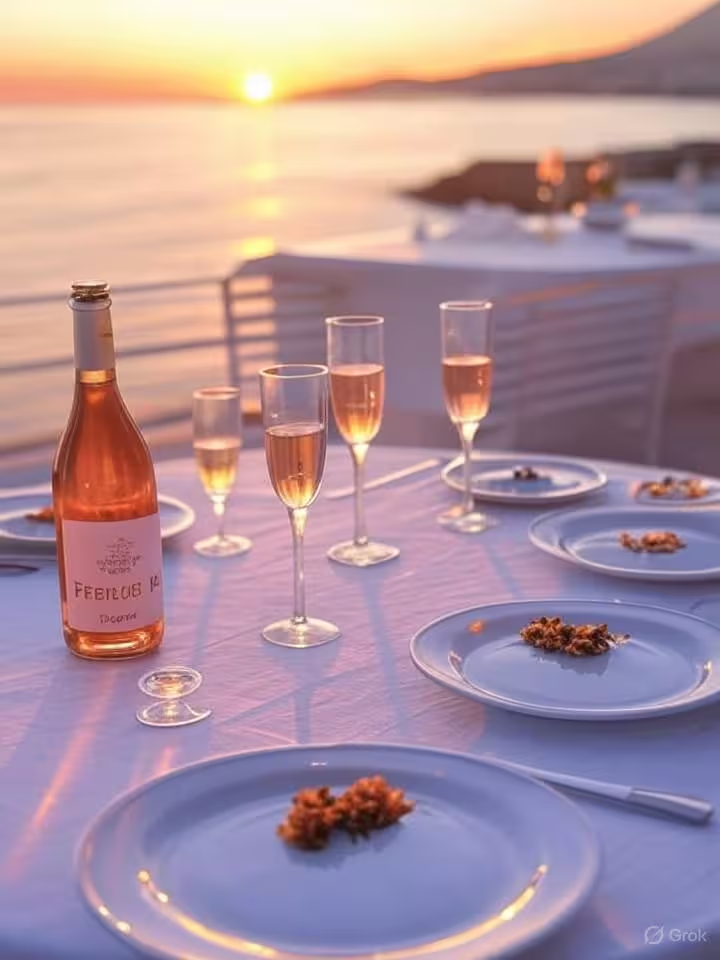
But these style choices aren’t arbitrary. They signal a readiness for the circuit’s subtle cue, from impromptu invitations to private villas in the hills to exclusive events at clubs like Les Caves du Roy. As fashion critic Vanessa Friedman observed in The New York Times, “Dressing for luxury spaces requires fluency in a visual language that communicates both accessibility and exclusivity—a delicate balance.”
The aesthetic extends beyond clothing. A 32-year-old benefactor based in Geneva told us: “I notice the details—the way someone carries themselves at a beach club, their conversational range, whether they’re genuinely curious or merely performing curiosity. Saint-Tropez rewards authenticity, even within arrangements.”
The sartorial essentials

For those navigating the circuit, certain pieces have become signifiers:
- Linen separates in neutral palettes that transition seamlessly from beach to dinner
- Statement jewelr—chunky gold or delicate layered pieces that catch light during golden hour*Designer
- swimwear that balances coverage with allure (brands like Eres and Melissa Odabash dominate)
- Leather sandals from houses like Ancient Greek or Hermès that whisper rather than shout wealth
Beyond the Tropez borders
The Mediterranean sugar scene extends beyond Saint-Tropez’s borders, weaving through nearby enclaves like Monaco and Cannes. The circuit forms a loose network, with participants migrating between spots via helicopter or speedboat, chasing the rhythm of festivals and regattas. The Monaco Yacht Show draws parallels, but Saint-Tropez offers a more intimate canvas.
“It’s the unscripted moments—the sunset aperitifs—that make this place magical,” a 54-year-old art collector from Milan confided. “You’re not just escaping; you’re reinventing.” This sentiment captures something essential: Saint-Tropez functions as both retreat and reinvention space, where identities can be temporarily shed and rebuilt.
Historian Juliet Nicolson, examining upper-class leisure patterns in her book *Frostquake*, notes that such enclaves have always served dual purposes: “They’re simultaneously spaces of genuine rest and stages for performing a particular version of oneself. The tension between those functions creates the distinctive energy of places like Saint-Tropez.”

The economics of ephemeral luxury
The economic underbelly adds another layer of complexity. With luxury spending in the region topping €500 million annually during peak season, according to French tourism reports, the influx sustains an ecosystem of high-end services—from bespoke yacht charters to personalized concierge experiences. What’s particularly interesting is how this wealth circulation influences local culture, blending Provençal traditions with global influences.
Markets brim with artisanal goods, but it’s the off-menu offerings—**private chefs crafting meals aboard superyachts**, **exclusive wine tastings in historic cellars**, **after-hours access to galleries**—that hint at the deeper connections forged here. Economist Robert Frank, who studies luxury consumption patterns, argues that “positional goods”—items whose value derives partly from their exclusivity—flourish in environments like Saint-Tropez precisely because scarcity is built into the experience.
A 29-year-old sugar baby originally from Copenhagen explained the economic calculus: “A summer in Saint-Tropez might yield connections that transform your entire trajectory. One introduction at the right dinner party can open professional doors that would take years to access otherwise. The lifestyle is beautiful, yes, but it’s also strategic.”
Digital discretion in an analog paradise
In terms of social dynamics, the summer circuit reflects broader trends in relational fluidity. Platforms like TikTok and Instagram Reels showcase snippets of this life, with creators posting enigmatic stories of “unexpected adventures” that skirt direct references but evoke the sugar ethos. Celebrities such as Bella Hadid, spotted in similar settings, embody the aspirational blend of beauty and intellect that defines the modern sugar baby.
We’ve observed a pivot toward **intellectual compatibility**, where discussions on art auctions or sustainable investing pepper poolside chats, elevating the experience from mere indulgence to intellectual pursuit. Psychologist Esther Perel, whose work explores modern relationships, suggests that “the most successful unconventional arrangements are those that honor both parties’ full complexity—their minds as much as their circumstances.”
Yet there’s a paradox at play. While social media amplifies the lifestyle’s visibility, the most successful participants practice careful curation. “You share enough to signal you’re part of this world, but never so much that you compromise discretion,” explained a 35-year-old tech entrepreneur who summers in Saint-Tropez annually. “The circuit values mystery.”
The bigger picture: Sustainability meets indulgence
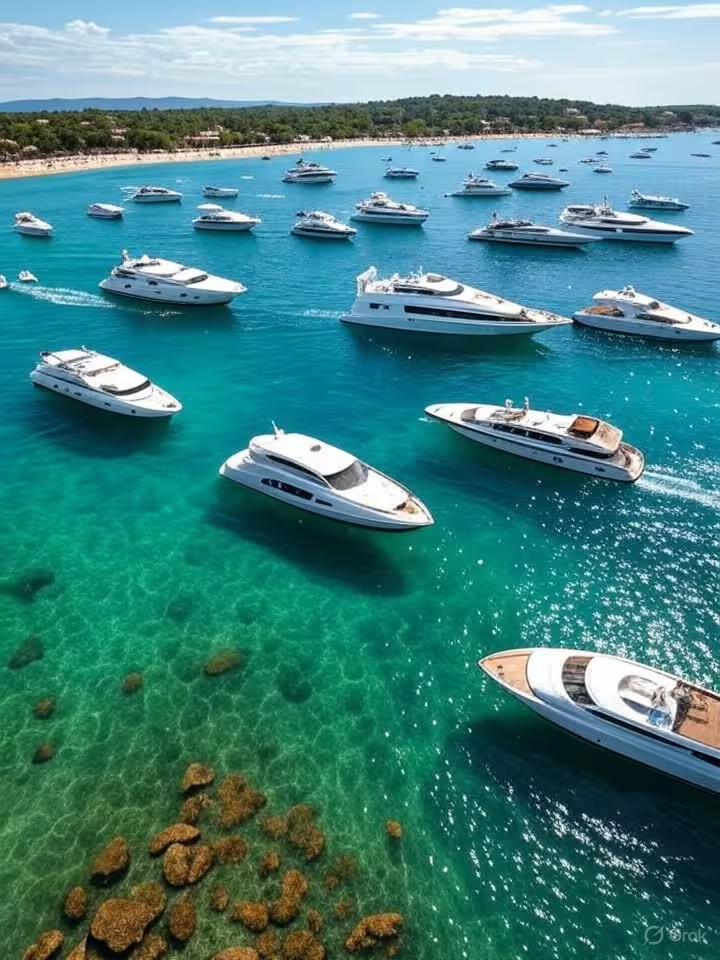
With climate conversations dominating global discourse, Saint-Tropez’s sugar circuit is subtly greening. We’ve noticed an uptick in eco-conscious choices, from electric tenders ferrying guests to shore to benefactors investing in sustainable yacht designs. Data from the International Maritime Organization highlights a 15% increase in green initiatives among luxury vessels, mirroring a broader shift toward responsible opulence.
This evolution speaks to a maturing scene, where indulgence aligns with awareness. “The wealthiest clients now ask about carbon offsets and sustainable sourcing,” revealed a concierge at one of Saint-Tropez’s premier hotels. “Luxury is being redefined to include environmental consciousness.”
Fashion designer Stella McCartney, a longtime advocate for sustainable luxury, has noted that “true elegance in the 21st century must account for impact.” Her perspective resonates within the sugar circuit, where younger participants especially push for arrangements that reflect contemporary values around sustainability and social responsibility.
The seasonal rhythm and its aftermath
But Saint-Tropez’s charm lies in its ephemerality. As summer wanes, the circuit disperses, leaving behind echoes of laughter and lingering scents of Diptyque candles. What we’re seeing is a resilience in this lifestyle, adapting to post-pandemic desires for meaningful escapes.
“It’s like a seasonal bloom—vibrant, fleeting, but it plants seeds for the year ahead,” a 31-year-old sugar baby based in Paris told us as she prepared to return to her master’s program. This sentiment captures the zeitgeist: **a world where luxury isn’t just consumed but curated**, fostering connections that transcend the season.
The post-summer months often reveal which connections had substance beyond circumstance. Some arrangements transition into year-round support systems—financial backing for business ventures, mentorship relationships, or genuine romantic partnerships. Others dissolve like morning mist over the harbor, leaving both parties with memories and perhaps a Cartier bracelet as artifact.
What this means for the future of luxury dating

As we look toward future seasons, several trends seem poised to reshape Saint-Tropez’s sugar landscape. **Increased global mobility** means participants arrive from more diverse geographic origins—Dubai, Singapore, São Paulo—bringing different cultural expectations to arrangements. **Generational wealth transfer** is creating younger benefactors, sometimes barely a decade older than their sugar babies, who seek partnerships that feel more collaborative than hierarchical.
Technology, too, continues to evolve the space. Virtual reality previews of yachts and villas, cryptocurrency payments for discretion, even AI-powered matching that claims to predict compatibility beyond surface chemistry—all are emerging in luxury dating spaces. Yet Saint-Tropez itself remains decidedly analog in its essential appeal. The sun still sets in the same breathtaking trajectory, the waves still lap against ancient stone, and human connection still requires presence.
Cultural critic Wesley Morris, writing about luxury and desire, observes that “the most enduring status symbols are experiences that can’t be digitally replicated—the weight of actual sea air, the texture of genuine human attention.” Saint-Tropez offers precisely this irreplicability, which may explain its enduring position atop the sugar circuit hierarchy.
The bottom line
Ultimately, Saint-Tropez in summer embodies a microcosm of the sugar world’s allure—**a blend of hedonism and strategy set against a backdrop of timeless beauty**. It’s a place where traditional morality suspends without disappearing entirely, where economic exchange intertwines with emotional possibility, where the very wealthy and the very strategic meet on terms both parties negotiate.
As the Mediterranean season reaches its crescendo each August, yacht decks fill with champagne toasts that celebrate both arrivals and departures. The circuit’s participants—sugar babies and benefactors alike—understand they’re engaging in something ancient yet thoroughly modern. Courtesans have frequented these shores for centuries, after all. What’s changed isn’t the fundamental dynamic but rather the transparency, the vocabulary, and the sense that these arrangements can be crafted intentionally rather than stumbled into.
The question that lingers, though, as the season winds down and the crowds thin, is whether Saint-Tropez’s magic lies in what it offers or what it allows us to become. Perhaps it’s both—a place where the Mediterranean sun illuminates not just bronzed skin but also the contours of desire, ambition, and the endless human capacity for reinvention. As the waves lap against gilded hulls, the circuit continues to captivate, drawing those who seek not just the sun, but the stories it illuminates.