
In the shimmering undercurrents of modern romance, sugar relationships have evolved far beyond their whispered origins, emerging as a sophisticated dance of mutual benefit and aspiration. We’ve noticed a shift in recent years—what was once a niche pursuit has woven itself into the fabric of contemporary dating culture, influenced by everything from economic pressures to the glow of perfectly curated social media feeds.

What’s more interesting is how this evolution mirrors broader societal trends. Data from platforms like Seeking Arrangement—now rebranded simply as Seeking—indicates a 20% uptick in memberships over the past two years, with users spanning demographics that defy old stereotypes. No longer confined to the archetypal young ingénue and affluent benefactor, these connections now encompass professionals in their thirties and forties, blending ambition with affection in ways that feel refreshingly pragmatic. The shift speaks to something deeper: a generation rethinking the economics of intimacy.
As one sugar baby in her early thirties—a marketing executive from Manhattan—confided to us over espresso in SoHo, “It’s not about dependency; it’s about elevating each other. My arrangements have funded my side hustle while introducing me to networks I never knew existed. It’s patronage with a pulse.” Her words capture a zeitgeist where empowerment and entrepreneurship intersect, turning what might seem transactional into a catalyst for personal growth and professional advancement.
The reality, however, is layered with nuance. In an era dominated by shows like The White Lotus and Succession—where wealth disparities are dramatized with biting satire—sugar dynamics offer a real-world counterpoint. Celebrities such as Lana Del Rey, with her lyrical nods to opulent escapism and doomed glamour, subtly echo this allure. Meanwhile, TikTok influencers flaunt #SugarBabyLife hauls that blend luxury unboxings with candid vlogs about negotiating allowances and setting boundaries. These cultural references aren’t just entertainment; they reflect a collective fascination with alternative paths to affluence amid stagnant wages and soaring living costs, particularly among younger generations rewriting traditional dating norms.
The digital renaissance of sugar dating
But here’s where it gets fascinating: the digital landscape has democratized access, transforming sugar relationships from clandestine hotel meetings to algorithmically curated matches. Apps and specialized sites now employ AI-driven compatibility tools, prioritizing shared interests—contemporary art, venture capital, travel aesthetics—over mere financials. We’ve seen a surge in profiles emphasizing intellectual rapport, think private gallery viewings or startup mentorship sessions, over traditional allowance arrangements, aligning with a post-pandemic desire for deeper, more meaningful connections.
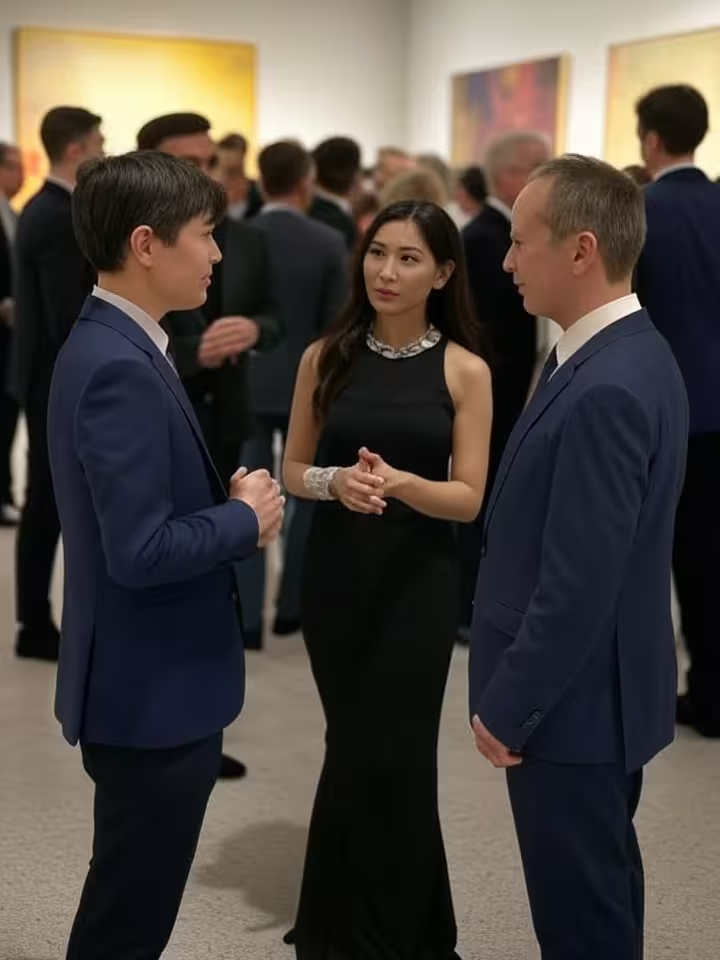
Statistics from a 2023 industry analysis highlight that 35% of new users cite “companionship with benefits” as their primary motivation, up from just 15% a decade ago. This pivot underscores a broader cultural move toward authenticity, where vulnerability has become the new currency of connection. Imagine scrolling through Instagram stories of sugar pairs jetting off to Mykonos or Tulum, not just for the glamour, but for the shared narratives of ambition and resilience that accompany them—the late-night conversations about building empires, the mutual support through career pivots.
“It’s evolved from sugar to synergy,” one anonymous contributor—a tech entrepreneur in his mid-forties based in San Francisco—shared with us over encrypted messaging. “My partner isn’t just arm candy for investor dinners; she’s a sounding board for my ventures, someone who challenges my assumptions. The financial aspect is there, absolutely, but it’s wrapped in genuine collaboration.” Such sentiments reveal how these relationships are redefining power structures, often subverting expectations in a world still grappling with evolving gender norms and economic inequality.
The transformation extends beyond individual relationships. Dr. Eva Illouz, sociologist and author of Why Love Hurts, has noted that “contemporary romantic arrangements increasingly mirror market logics, but with an emotional dimension that complicates simple transactional readings.” Her observation rings particularly true in the sugar sphere, where participants navigate the tension between authentic connection and economic exchange with increasing sophistication.
Cultural currents and aspirational aesthetics
Delving deeper, the influence of global pop culture cannot be overstated. Series like Euphoria explore transactional intimacies with raw intensity, while celebrities such as Cardi B openly discuss their past hustles, normalizing the pursuit without apology or shame. On platforms like Twitter and Reddit, threads dissecting the ethics of sugar dating garner thousands of engagements, blending feminist critiques with celebratory anecdotes and practical advice on vetting potential partners.
What’s more interesting is the intersection with luxury lifestyle trends and quiet wealth aesthetics. High-end brands, from Chanel to Loro Piana, subtly court this demographic through targeted digital campaigns that promise elevation and belonging. We’ve observed sugar babies curating wardrobes that whisper rather than shout—cashmere blends in neutral palettes, minimalist jewelry from independent designers, investment handbags that hold their value. This aesthetic mirrors the style popularized by figures like Sofia Richie Grainge and Hailey Bieber, reflecting a shift toward stealth wealth in an economy where ostentatious displays feel increasingly tone-deaf.
This isn’t mere consumerism; it’s a statement of self-worth in an economy where traditional ladders—affordable housing, stable employment, generational wealth transfer—feel increasingly out of reach. As economist Dr. Marina Adshade, author of Dollars and Sex, observes: “When conventional paths to financial security are blocked, people innovate. Sugar relationships represent one such innovation, a pragmatic response to economic precarity dressed in Prada.”
The reality, however, tempers the glamour. Economic data from the Bureau of Labor Statistics shows millennial and Gen Z wealth accumulation lagging significantly behind previous generations at comparable ages, fueling interest in alternative financial arrangements. Yet amid this sobering backdrop, a sense of community thrives in private Discord servers and Reddit forums like r/sugarlifestyleforum, where experiences are shared not as blueprints, but as nuanced reflections on navigating desire, ambition, and the complicated terrain between the two.
“Sugar isn’t a shortcut; it’s a spotlight on what society values,” explained a Los Angeles-based multimedia artist in her late twenties, whom we’ll call Elena. “My arrangements have funded my gallery shows and studio rent, turning patronage into something profoundly modern. I think of the Medicis, honestly—they supported artists not out of pure altruism, but because it elevated their own status. This is just the contemporary version.” Her perspective elevates the conversation, framing these relationships as extensions of historical patron-artist bonds, reimagined for the Instagram age and gig economy.
The psychology of modern arrangements
Understanding the psychological dimensions requires looking beyond surface transactions. Dr. Zhana Vrangalova, sex researcher and adjunct professor at New York University, has studied non-traditional relationships extensively. She notes that “consensual arrangements with clear parameters can actually foster greater honesty than conventional dating, where expectations remain unspoken and resentments build.” This transparency—when genuine—creates a foundation that many traditional relationships lack.
We’ve noticed that successful sugar relationships often involve extensive negotiation upfront: boundaries, expectations, frequency of contact, financial terms. This level of communication, while initially transactional in feel, can evolve into emotional intelligence that serves participants well beyond any single arrangement. One longtime member of the community, a 34-year-old pharmaceutical sales director from Chicago, explained it this way: “Learning to articulate my needs without apology in these relationships completely changed how I navigate everything else—friendships, work negotiations, even therapy. There’s power in clarity.”
The flip side, of course, involves inherent risks: power imbalances, emotional entanglement despite intentions otherwise, and the potential for exploitation on both sides. Educated participants entering these arrangements emphasize due diligence—video calls before meetings, public initial encounters, transparent communication about STI testing and expectations. The sophistication with which many approach safety protocols rivals that of any traditional dating scenario, adapted for the unique dynamics at play.
Geographic hotspots and seasonal circuits
In cities like Miami, Dubai, and Monaco—where luxury converges with innovation and old money mingles with new—sugar scenes pulse with particular energy. Events disguised as networking soirées, yacht parties under starlit Mediterranean skies, invite-only gatherings during Art Basel or Cannes Film Festival foster connections that transcend the purely transactional. These are spaces where social capital matters as much as financial capital, where introductions can unlock opportunities far beyond any allowance.
“It’s about curating a life that’s as rich in experiences as it is in resources,” remarked a finance professional from London whom we interviewed during a research trip. “The arrangements I know about aren’t building evenings—they’re building empires. Introductions lead to investment opportunities, mentorship, sometimes even business partnerships. The financial aspect is table stakes; the real value is access.”
This geographic dimension reveals another layer: the seasonal sugar circuit. Summer finds concentrations in Mediterranean hotspots like Saint-Tropez and the Amalfi Coast, while winter shifts to Aspen, Gstaad, and Caribbean enclaves. Following this circuit requires not just financial access but cultural fluency—knowing which restaurants matter, which parties to attend, how to navigate social hierarchies with grace. It’s finishing school for the digital age, where the curriculum is unwritten but the lessons are invaluable.
The economics of emotional labor
What often goes undiscussed in mainstream narratives is the emotional labor involved. Sugar relationships, like all intimate arrangements, require maintenance: thoughtful conversation, attentiveness, the ability to read situations and adapt accordingly. This labor—disproportionately performed by sugar babies regardless of gender—has real value that goes beyond financial compensation.
“People think it’s all champagne and shopping sprees,” shared a 29-year-old graduate student in Boston balancing her arrangement with dissertation research. “But there’s genuine work involved. Remembering details about his business deals, being present during stressful periods, providing emotional support. It’s relationship labor, just with different parameters than conventional dating. The financial aspect acknowledges that labor explicitly rather than leaving it uncompensated and unappreciated.”
This perspective aligns with broader conversations about how economists are beginning to analyze relationship dynamics through frameworks that account for non-monetary exchange. The growing field of relationship economics examines how people allocate time, attention, and emotional resources—currencies often more precious than money itself.
Shifting horizons and future trajectories
But here’s where it gets truly fascinating: the future points toward even greater integration and evolution. With the rise of Web3, cryptocurrency, and NFTs, some sugar dynamics now incorporate digital assets—crypto portfolios alongside Cartier, NFT collections as gifts, even co-investment in emerging tech. This blends romance with financial literacy and investment savvy, reflecting broader generational shifts in how wealth is created and transferred.
We’ve noticed early adopters—particularly in tech hubs like Austin and Singapore—structuring arrangements that include equity stakes in startups, tokenized access to exclusive communities, or collaborative investment strategies. It’s patronage meets venture capital, a model that could fundamentally reshape how we think about both relationships and resource distribution.
Cultural observers might draw parallels to films like Pretty Woman, but today’s iterations feel decidedly more empowered, less fairy-tale. YouTube essayists and podcast hosts dissect the psychology with academic rigor, citing studies from journals like Social Psychology Quarterly and Journal of Sex Research that explore mutual satisfaction in asymmetrical relationships. This analytical lens adds intellectual depth, transforming personal anecdotes into broader commentaries on inequality, aspiration, and the evolving nature of intimacy in late capitalism.
The bigger picture
What does this all mean for the future of relationships more broadly? The sugar phenomenon offers a lens through which to examine larger questions about transactionality in modern life. In an age where friendships are “networked,” romantic partners are “optimized” through algorithms, and personal brands are meticulously curated, perhaps sugar relationships simply make explicit what remains implicit elsewhere. They force conversations about value exchange that many conventional relationships avoid until resentment builds.
Esther Perel, psychotherapist and relationship expert, has noted in her work that “modern couples struggle with the contradiction of wanting both security and adventure, predictability and passion.” Sugar arrangements, in their explicit negotiation of terms, might offer one resolution to this paradox—compartmentalization that allows different needs to be met through different connections, rather than demanding one relationship fulfill every role.
This isn’t to suggest sugar dating as universal solution, but rather to acknowledge its place in an expanding constellation of relationship models. Polyamory, ethical non-monogamy, relationship anarchy, conscious uncoupling—all represent attempts to reimagine intimacy for contemporary life. Sugar relationships occupy one point in this spectrum, distinguished by their explicit acknowledgment of financial dynamics but united with other models in questioning whether monolithic relationship structures serve modern needs.
The bottom line
The zeitgeist here is one of reinvention, where sugar relationships serve as microcosms of larger societal shifts. As economic landscapes fluctuate—student debt spirals, housing becomes unaffordable, traditional employment contracts dissolve—these bonds offer one form of stability wrapped in sophistication. They challenge outdated notions of romance while embracing the aspirational ethos of our time, for better and worse.
We’ve watched this world expand from hidden corners to mainstream dialogues, and it’s clear the narrative is far from static. The questions it raises about power, desire, authenticity, and economics won’t resolve neatly. One longtime observer, a cultural critic in her forties who’s written extensively on modern intimacy, perhaps put it best: “Sugar relationships make us uncomfortable because they reveal truths about all relationships—that we’re always negotiating value, always exchanging resources. They just do it honestly.”
Whether you view this evolution as liberation or capitulation likely depends on your broader perspective on how market logics have infiltrated intimate life. What’s undeniable is the vitality of the conversation itself, the way sugar culture has sparked debates about feminism, agency, exploitation, and empowerment that extend far beyond any individual arrangement.
In the end, it’s the human element—the stories of growth, connection, and unapologetic pursuit—that keeps it captivating. The 22-year-old covering tuition, the 45-year-old finding companionship after divorce, the artist funding their vision, the entrepreneur building their network. Each narrative complicates simplistic judgments, revealing the messy reality of navigating desire and ambition in an age that promises everything while delivering precarity.
As we move forward, the question isn’t whether sugar relationships will persist—they clearly will, adapting to whatever forms wealth and connection take next. The question is what conversations they’ll continue to spark about how we value each other, what we expect from intimacy, and whether we can create relationship structures that serve human flourishing in all its complicated, contradictory glory.